
Description
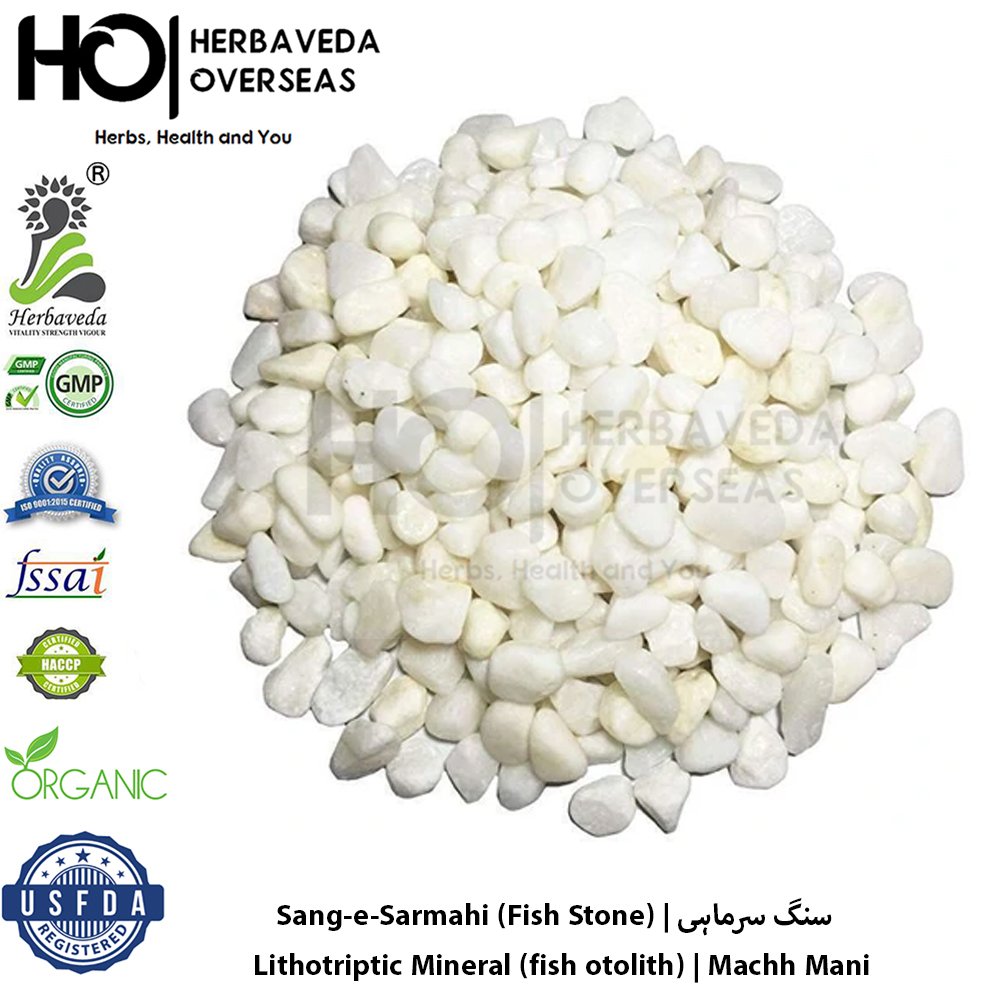
Sang-e-Sarmahi — literally ‘stone of the fish’ in Persian-Urdu — is a substance documented in classical Unani pharmacopoeia, derived primarily from the calcareous otoliths (inner ear stones) or scale concretions of large freshwater and marine fish species, including members of the Cyprinidae and Siluridae families. In the classical Unani Makhzan-ul-Adwiya, Sang-e-Sarmahi is classified as a mineral-equivalent drug of animal origin and is specifically incorporated in formulations for Hasaat al-Kulya wa al-Mathana (renal and urinary bladder stones). The calcareous composition (calcium carbonate with organic matrix) forms the pharmacological basis for its traditional lithontriptic application. The substance is documented in Ibn Sina’s Al-Qanun fi al-Tibb within the chapter on stones and minerals of animal origin. Commercial supply comes from freshwater fish-processing industries across Punjab, Uttar Pradesh, and Bengal.