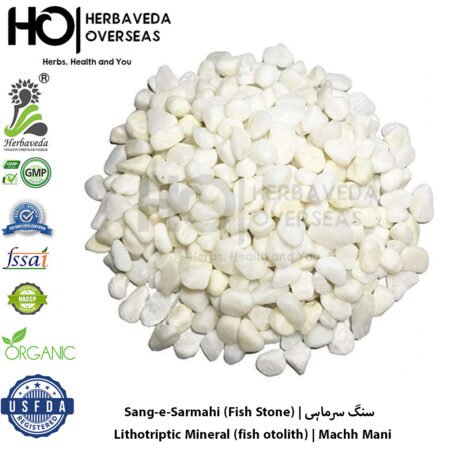
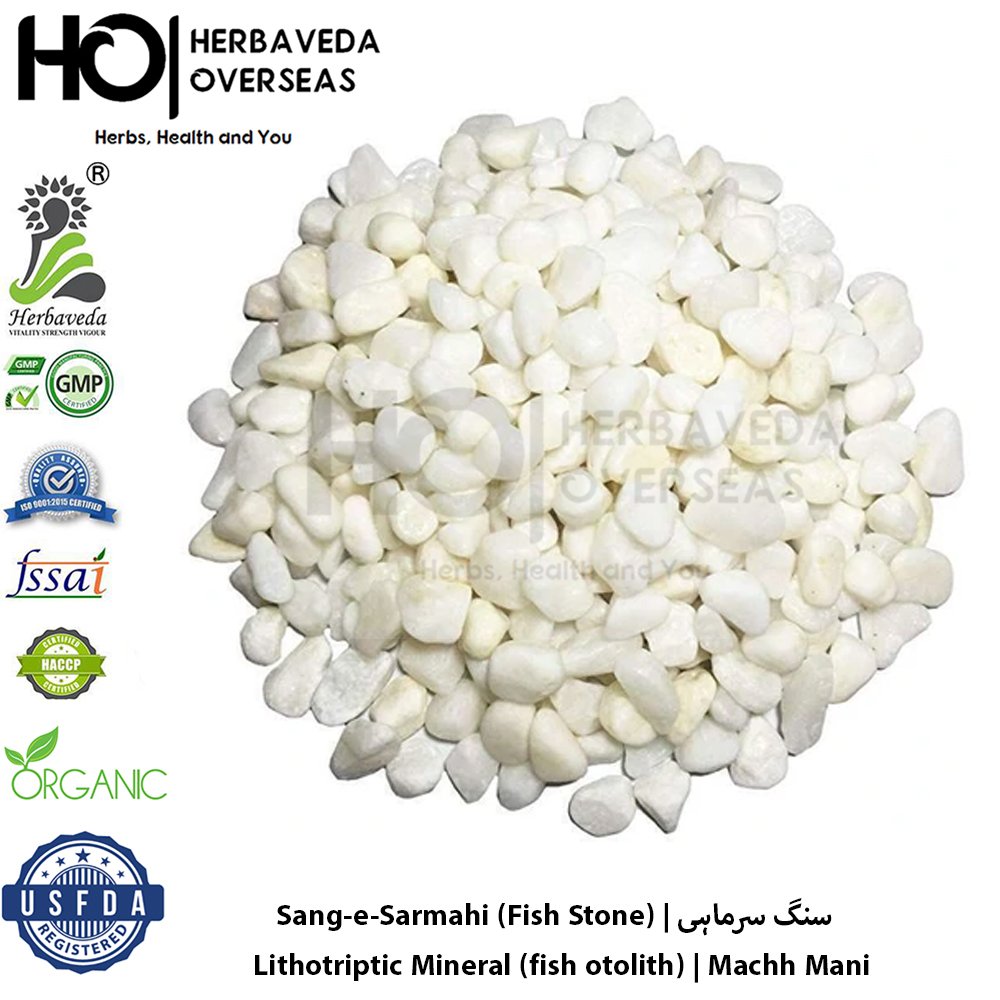
Sang-e-Sarmahi (Fish Stone) | سنگ سرماہی | Lithotriptic Mineral (Unidentified fish otolith)

1000 in stock

Price range: ₹630.00 through ₹840.00 inc GST

Sang-e-Sarmahi — fish stone or fish scale stone — is a mineral substance documented in classical Unani pharmacopoeia, derived from the calcareous otoliths (ear stones) or scale concretions of large fish species. In traditional Unani practice it has been included in preparations for urinary-tract wellness.

Buy It Now
  • Free Shipping & Exchanges
  • Flexible and secure payment, pay on delivery
  • 600,000 happy customers
Guarantee Safe & Secure Checkout
SKU: hbv2_10498_parent Categories: ,

Quick facts: Sang-e-Sarmahi (Fish Stone)

Common name
Sang-e-Sarmahi, Fish Stone
Hindi / local name
سنگ سرماہی
Type
Minerals & salts
Pack sizes
0.5 kg, 1 kg (from ₹630)
Packed by
Herbaveda Overseas, Khari Baoli, Delhi (since 1971)
Storage
Airtight container, cool and dry place, away from sunlight
Bulk / export
Available – ask for a wholesale quote

What is Sang-e-Sarmahi called in English?

Sang-e-Sarmahi (سنگ سرماہی) is Fish Stone.

Can I buy Sang-e-Sarmahi in bulk?

Yes. Retail packs are sold here; for bulk quantities, contact us for wholesale and export prices.

For traditional and culinary use. Not intended to diagnose, treat, cure or prevent any disease. Consult a doctor before use, especially if you are pregnant, nursing or taking medicines.

Description

Sang-e-Sarmahi — literally ‘stone of the fish’ in Persian-Urdu — is a substance documented in classical Unani pharmacopoeia, derived primarily from the calcareous otoliths (inner ear stones) or scale concretions of large freshwater and marine fish species, including members of the Cyprinidae and Siluridae families. In the classical Unani Makhzan-ul-Adwiya, Sang-e-Sarmahi is classified as a mineral-equivalent drug of animal origin and is specifically incorporated in formulations for Hasaat al-Kulya wa al-Mathana (renal and urinary bladder stones). The calcareous composition (calcium carbonate with organic matrix) forms the pharmacological basis for its traditional lithontriptic application. The substance is documented in Ibn Sina’s Al-Qanun fi al-Tibb within the chapter on stones and minerals of animal origin. Commercial supply comes from freshwater fish-processing industries across Punjab, Uttar Pradesh, and Bengal.
Additional information

WeightN/A
DimensionsN/A