Herbaveda Overseas

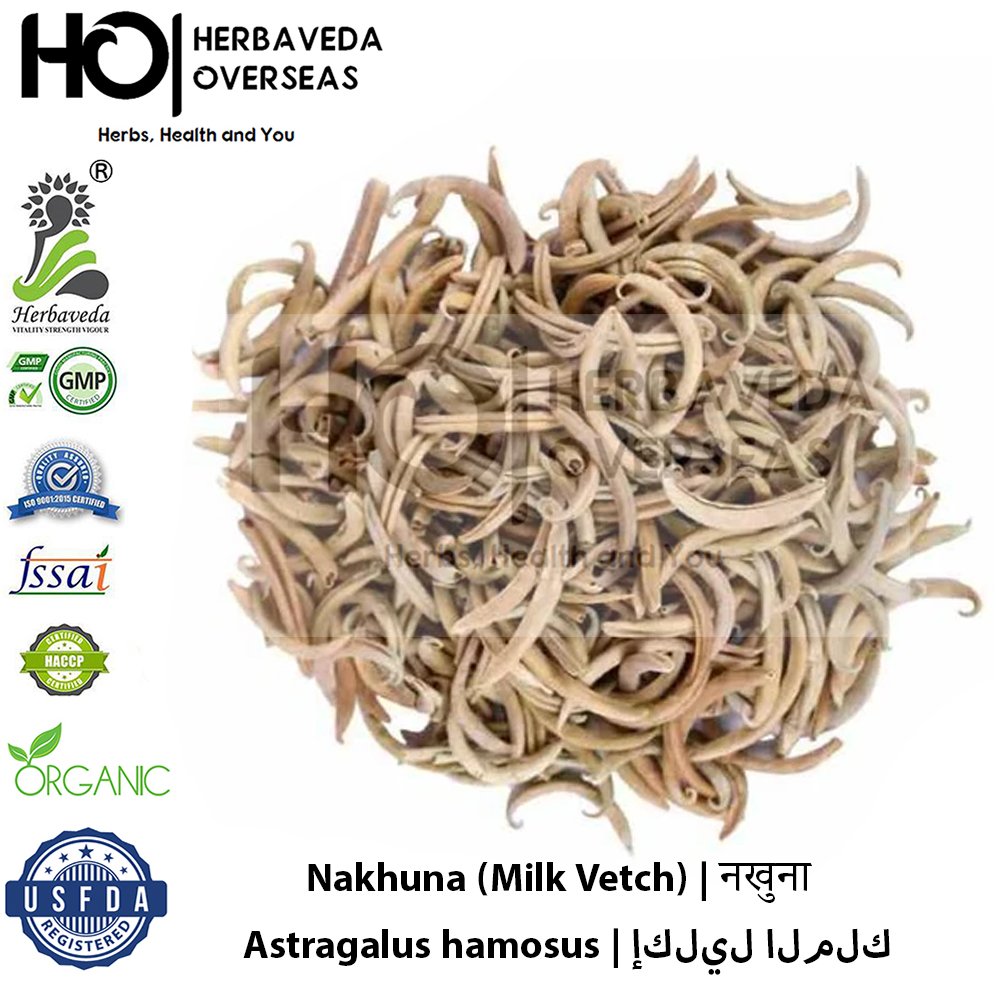
Nakhuna (Milk Vetch) | नखुना | Astragalus hamosus

in stock

Astragalus hamosus is an annual leguminous herb native to the Mediterranean region and central Asia, naturalized across parts of the Indian subcontinent. Its seeds — curved, hook-like pods — are documented in Unani pharmacopoeia for preparations traditionally associated with nutritive and tonic formulations.

  • Free Shipping & Exchanges
  • Flexible and secure payment, pay on delivery
  • 600,000 happy customers
Guarantee Safe & Secure Checkout

Quick facts: Nakhuna (Milk Vetch)

Common name
Nakhuna, Milk Vetch
Hindi / local name
नखुना
Botanical name
Astragalus hamosus
Type
Whole edible and oil seeds
Packed by
Herbaveda Overseas, Khari Baoli, Delhi (since 1971)
Storage
Airtight container, cool and dry place, away from sunlight
Bulk / export
Available – ask for a wholesale quote

What is Nakhuna called in English?

Nakhuna (नखुना) is Milk Vetch – botanical name Astragalus hamosus.

How do I order Nakhuna in bulk?

Send us your quantity and destination through the contact page or WhatsApp +91-99717-54285 for a wholesale or export quote.

For traditional and culinary use. Not intended to diagnose, treat, cure or prevent any disease. Consult a doctor before use, especially if you are pregnant, nursing or taking medicines.

Description

Astragalus hamosus, a slender annual herb of the family Fabaceae, is native to the Mediterranean basin and Central Asia, extending through Iran and Afghanistan into the northwestern parts of the Indian subcontinent. The plant produces characteristic strongly curved or hook-shaped seed pods, which give it a distinctive morphology compared to other Astragalus species. While the genus Astragalus is best known in Western herbal medicine for the tonifying Chinese species A. membranaceus, A. hamosus is documented in Unani pharmacopoeial references and regional ethnobotanical surveys across Pakistan and northern India. The seeds have been incorporated in nutritive and general tonic formulations. The plant also provides a source of tragacanth-type gum from certain accessions, though commercial tragacanth is primarily derived from A. gummifer.
shopping cart