
Description
What is it?
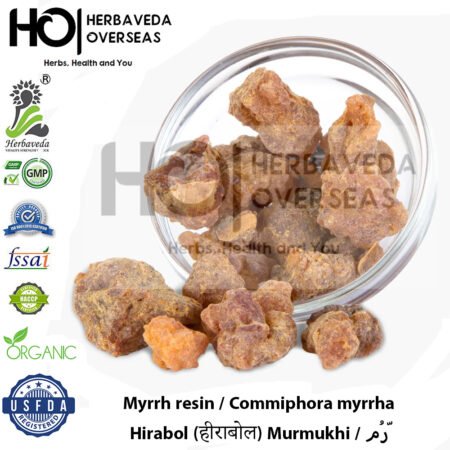
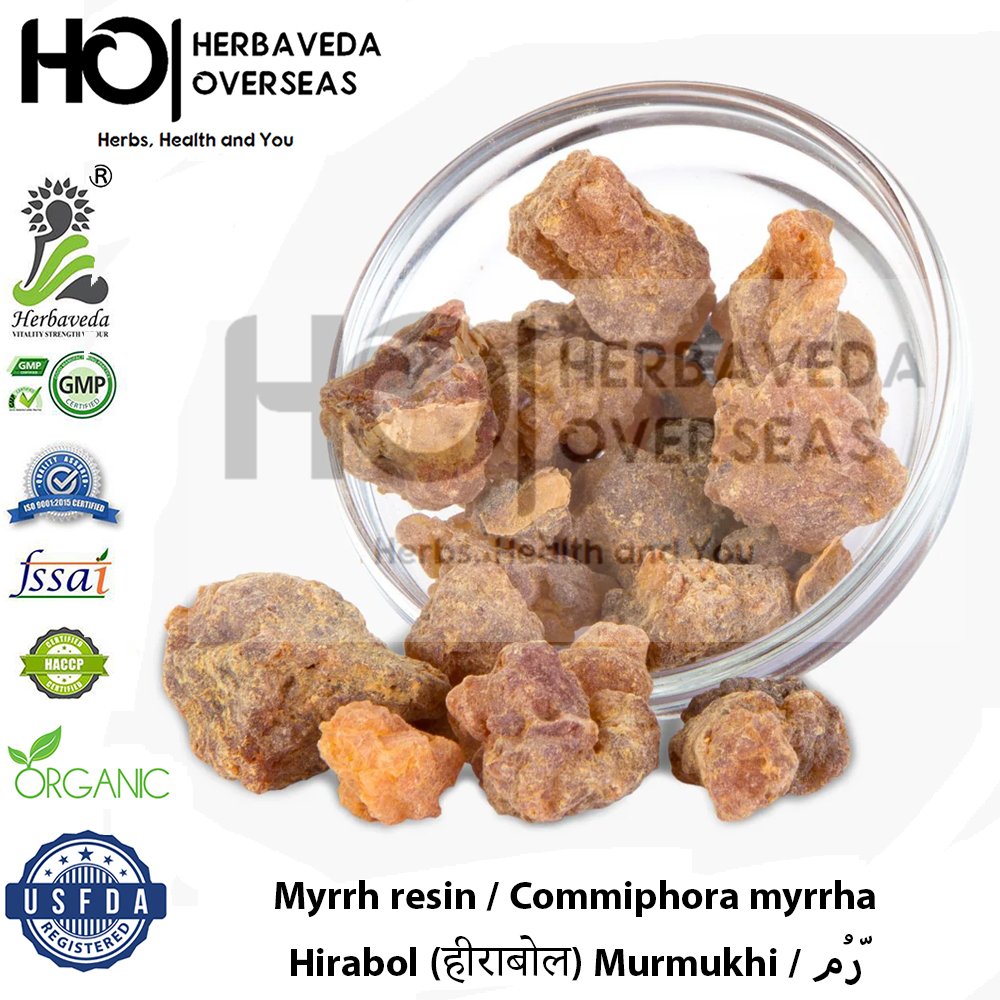
Mor Makkhi is myrrh, a natural resin from a small thorny tree of Africa and Arabia. It comes as reddish-brown lumps with a warm, bitter-sweet smell. Myrrh has been traded for thousands of years. In Indian shops it is also sold as Bol, Heerabol or Beejabol.
Also known as
Murr Makki, Bol, Heerabol (Hindi), Bola (Sanskrit), Murr (Unani), مر مکی (Urdu), myrrh, Commiphora myrrha
How it is used
- Tooth powder: ground and added to traditional manjan.
- Incense: burnt on charcoal or added to dhoop.
- Traditional preparations: used by vaidyas and hakims in tonics and ointments.
How to use
For incense, place a small piece on hot charcoal. For tooth powder, grind finely and mix a small amount with your usual manjan. For anything taken by mouth, ask a practitioner first.
Safety
Not for use during pregnancy. Do not take it internally without the advice of a qualified practitioner.
How to judge good quality
- Irregular reddish-brown to dark-brown tears and lumps.
- Warm, balsamic, slightly bitter smell, stronger when warmed.
- Free from bark, sand and dust.
Storage
Keep in an airtight container in a cool, dry place away from sunlight and moisture.
Frequently asked questions
Is mor makkhi the same as myrrh?
Yes. It is one of several trade names for myrrh.
Who should avoid myrrh?
Pregnant women should not use it. Anyone on regular medication should ask a doctor first.
Do you deliver across India?
Yes. Orders ship from Delhi to all states, usually within 1–3 working days. For bulk quantities, use our Request a Quote form.
Herbaveda, Delhi – trusted since 1971.
Sold as a raw herb for traditional and trade use. This information is educational and is not a substitute for medical advice.