Herbaveda Overseas

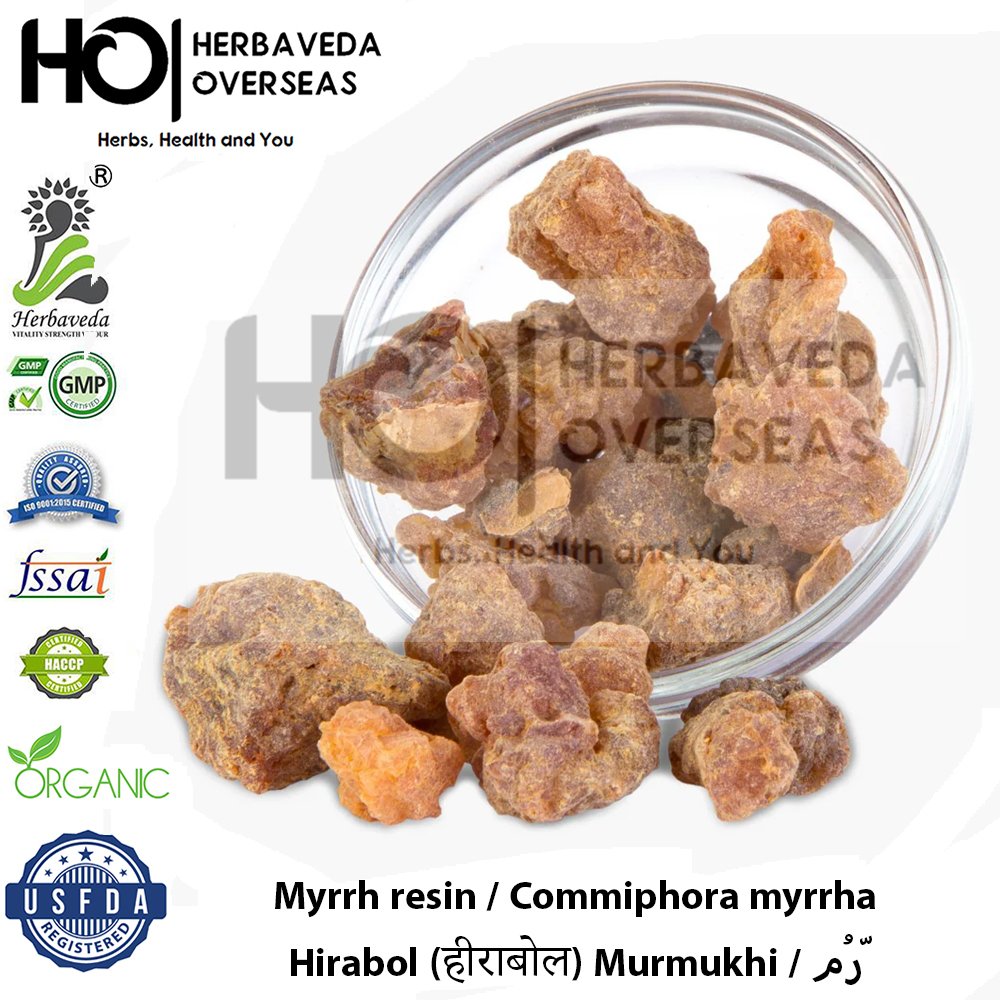
Mor Makkhi (Myrrh) | मोर मक्खी | Commiphora myrrha

in stock

Commiphora myrrha is a small thorny tree native to the arid regions of northeastern Africa — principally Somalia, Ethiopia, and Eritrea — and the southern Arabian Peninsula. Its aromatic oleogum resin — myrrh — is among the most historically significant and extensively traded botanical aromatic substances in world commerce, documented in Egyptian, Biblical, Greek, and classical Unani literature.

  • Free Shipping & Exchanges
  • Flexible and secure payment, pay on delivery
  • 600,000 happy customers
Guarantee Safe & Secure Checkout

Quick facts: Mor Makkhi (Myrrh)

Common name
Mor Makkhi, Myrrh
Hindi / local name
मोर मक्खी
Botanical name
Commiphora myrrha
Type
Raw roots
Packed by
Herbaveda Overseas, Khari Baoli, Delhi (since 1971)
Storage
Airtight container, cool and dry place, away from sunlight
Bulk / export
Available – ask for a wholesale quote

What is Mor Makkhi called in English?

Mor Makkhi (मोर मक्खी) is Myrrh – botanical name Commiphora myrrha.

How do I order Mor Makkhi in bulk?

Send us your quantity and destination through the contact page or WhatsApp +91-99717-54285 for a wholesale or export quote.

For traditional and culinary use. Not intended to diagnose, treat, cure or prevent any disease. Consult a doctor before use, especially if you are pregnant, nursing or taking medicines.

Description

Commiphora myrrha, the myrrh tree, is a small, thorny deciduous tree of the family Burseraceae, native to the dry coastal and escarpment scrublands of northeastern Africa — principally Somalia, Ethiopia, Eritrea, and Djibouti — and the southern Arabian Peninsula. Myrrh resin is obtained by tapping the bark, which exudes a pale yellowish-white liquid that hardens on contact with air into characteristic dark brown to orange-red irregularly shaped lumps with a distinctive balsamic, slightly bitter fragrance. Among the most ancient internationally traded botanical commodities, myrrh appears in the Ebers Papyrus, the Book of Exodus, ancient Chinese medical texts, and Ayurvedic references as Hirabol. Incorporated in Unani formulations under the name Murr, it has been traditionally used in preparations for wound care, dental hygiene, reproductive health, and anti-inflammatory applications.
shopping cart