
Description
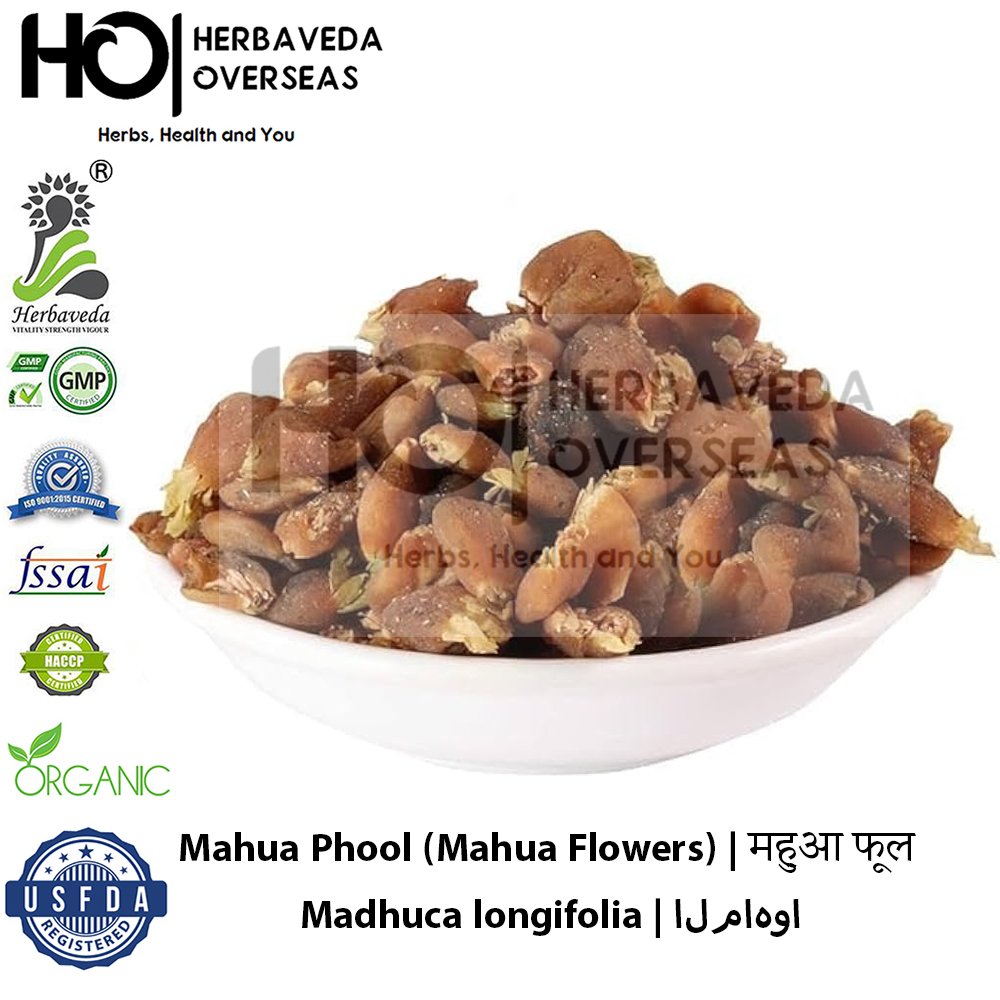
Madhuca longifolia, the mahua tree, is a large, slow-growing deciduous tree of the family Sapotaceae, native to the tropical dry and moist forests of central India — particularly Jharkhand, Odisha, Chhattisgarh, Madhya Pradesh, and Maharashtra — where it holds profound cultural, nutritional, and economic significance for indigenous communities. The tree flowers between February and April, dropping fleshy, cream-coloured, sugary corollas that are collected from the forest floor and sun-dried for use as a nutritive food, traded as dried mahua flowers in local markets. Rich in sugars, fats, and amino acids, the flowers are documented in Ayurvedic texts as a cooling, nutritive, and Pitta-alleviating tonic. They are also traditionally fermented to produce a spirit and processed for their fixed oil (Mohwa butter). The mahua tree is legally protected in many Indian states.