
Description
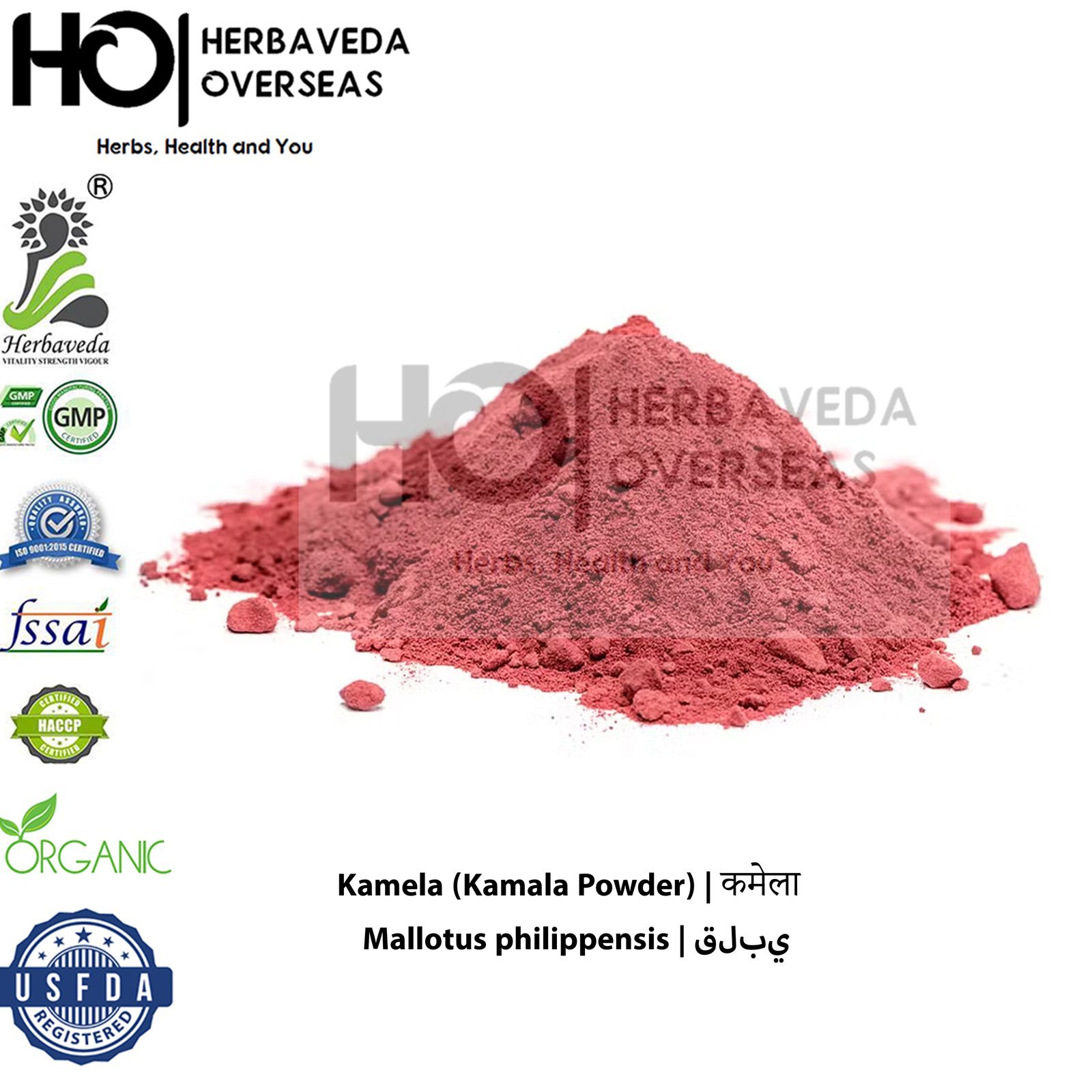
Mallotus philippensis, the kamala tree, is a small to medium-sized deciduous tree of the family Euphorbiaceae, widely distributed across the tropical and subtropical forests of South Asia, Southeast Asia, and tropical Australia. The tree produces compact, capsular fruits whose external surface is coated with a bright brick-red to orange powder composed of glandular hairs — this powder, separated by sieving, constitutes the commercial drug Kamala. Documented in the Charaka Samhita and Sushruta Samhita under the name Kampillaka, Kamala powder is primarily referenced in Ayurvedic formulations for expelling intestinal worms — particularly tapeworms — and for preparations addressing skin pigmentation. It has also been historically used as a silk and wool dye in South Asian textile traditions.