
Description
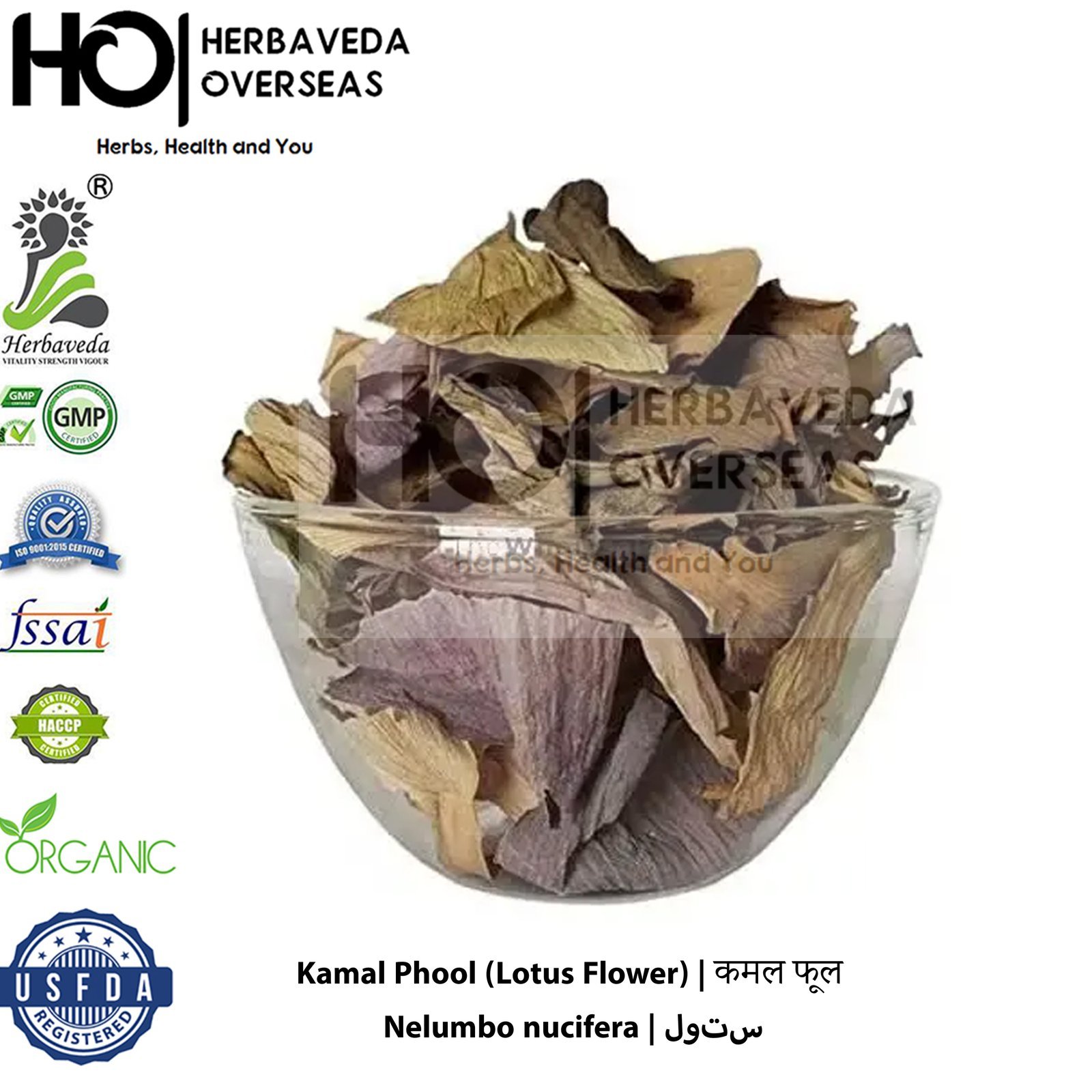
The flowers of Nelumbo nucifera, the sacred lotus of Asia, occupy a unique position in both botanical scholarship and cultural tradition. Emerging from murky aquatic substrates to bloom in pristine perfection, the lotus flower is the central botanical metaphor of both Hindu and Buddhist iconography. The large, fragrant, pink or white flowers — opening in the morning and closing at dusk — are documented in the Charaka Samhita and Ashtanga Hridayam as a cooling, Pitta-reducing botanical, traditionally incorporated into preparations for skin health, haemostatic conditions, and cardiac vitality. The dried petals and stamens are also employed in Ayurvedic formulations as a Shukrala (semen-enhancing) agent. Cultivated across the ponds of Uttar Pradesh, Bihar, Manipur, and West Bengal, the lotus flower also yields a rare and valuable essential oil in limited quantities.