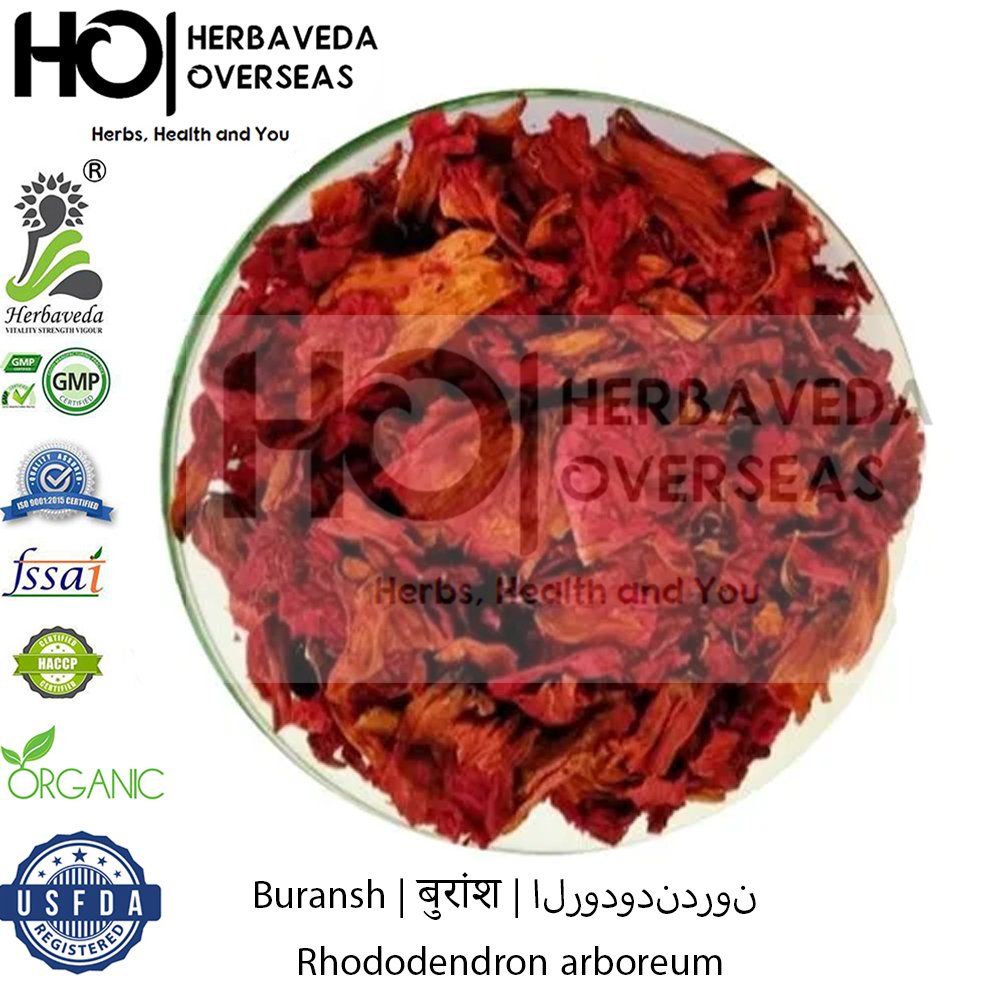
Buransh (Rhododendron Flower) | बुरांश | Rhododendron arboreum

in stock

Rhododendron arboreum is a large evergreen tree native to the Himalayan range and the hills of peninsular India, growing between 1,500 and 3,600 metres. The brilliant crimson flowers are the state flower of Uttarakhand and Nagaland, and are used in traditional hill community preparations and juices.

  • Free Shipping & Exchanges
  • Flexible and secure payment, pay on delivery
  • 600,000 happy customers
Guarantee Safe & Secure Checkout

Quick facts: Buransh (Rhododendron Flower)

Common name
Buransh, Rhododendron Flower
Hindi / local name
बुरांश
Botanical name
Rhododendron arboreum
Type
Dried flowers
Packed by
Herbaveda Overseas, Khari Baoli, Delhi (since 1971)
Storage
Airtight container, cool and dry place, away from sunlight
Bulk / export
Available – ask for a wholesale quote

What is Buransh called in English?

Buransh (बुरांश) is Rhododendron Flower – botanical name Rhododendron arboreum.

How do I order Buransh in bulk?

Send us your quantity and destination through the contact page or WhatsApp +91-99717-54285 for a wholesale or export quote.

For traditional and culinary use. Not intended to diagnose, treat, cure or prevent any disease. Consult a doctor before use, especially if you are pregnant, nursing or taking medicines.

Description

Rhododendron arboreum, the tree rhododendron, is an evergreen member of the family Ericaceae and the state tree of both Uttarakhand and Nagaland. It is native to the Himalayan arc from Afghanistan to Yunnan, China, and to the hills of the Western Ghats, growing in montane and sub-alpine forests between 1,500 and 3,600 metres elevation. The brilliant scarlet-red flowers appear between February and April and have been a component of traditional hill community food and beverage preparations in Uttarakhand, Himachal Pradesh, and Nepal, where the petals are processed into squash and vinegar. The dried flowers have also been incorporated into ethnobotanical applications among Himalayan communities for their astringent and tonic properties documented in regional folk medicine records.