
Description
What is it?
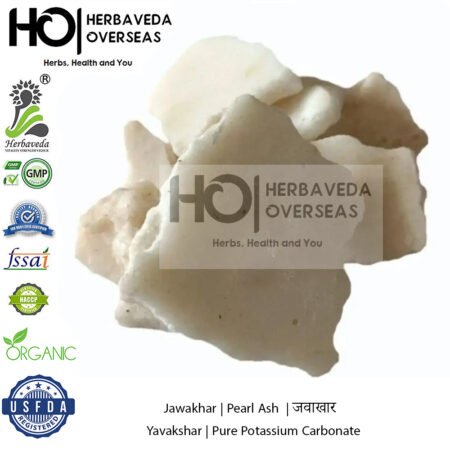
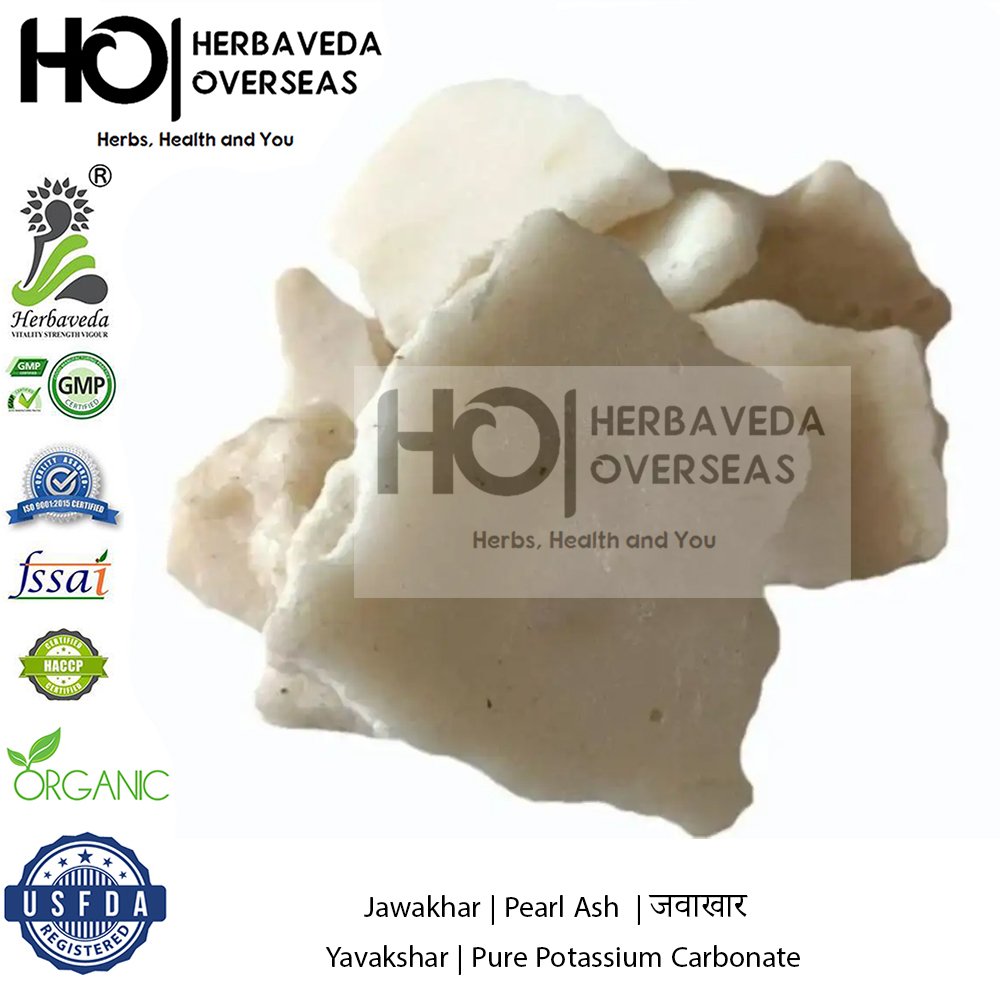
Jawakhar, or Yavakshara, is a white alkaline salt. Traditionally, barley plants are burnt, the ash is soaked, and the clear water is boiled down to leave this salt. It is mostly potassium carbonate (pearl ash) and is one of the classical ksharas of Ayurveda.
Also known as
Yavakshar, Yavakshara (Sanskrit), pearl ash, potash, جواکھار (Urdu)
How it is used
- Ayurvedic preparations: used in very small amounts in churnas and vatis.
- Practitioners: vaidyas use it as an ingredient in compound medicines.
- Craft and food processing: used as a traditional alkali.
Safety
Jawakhar is a strong alkali. Raw jawakhar can burn the mouth, throat and skin. Never eat it raw. In Ayurveda it is used only in small amounts inside prepared medicines made by qualified practitioners. Wear gloves when handling it, keep it away from eyes and keep it out of reach of children.
How to judge good quality
- White to off-white granules or lumps, dry and free-flowing.
- Clean, without black specks or foreign matter; feels soapy when wet.
Storage
Keep tightly closed in a dry place. Jawakhar draws moisture from the air and turns wet if left open. Keep away from children.
Frequently asked questions
Can I eat jawakhar?
No, not raw. It is used only in small amounts inside prepared medicines.
How is it different from sajji khar?
Sajji khar is sodium-based; jawakhar is potassium-based.
Do you deliver across India?
Yes. Orders ship from Delhi to all states, usually within 1–3 working days. For bulk quantities, use our Request a Quote form.
Herbaveda, Delhi – trusted since 1971.
Sold as a raw herb for traditional and trade use. This information is educational and is not a substitute for medical advice.