
Description
What is it?
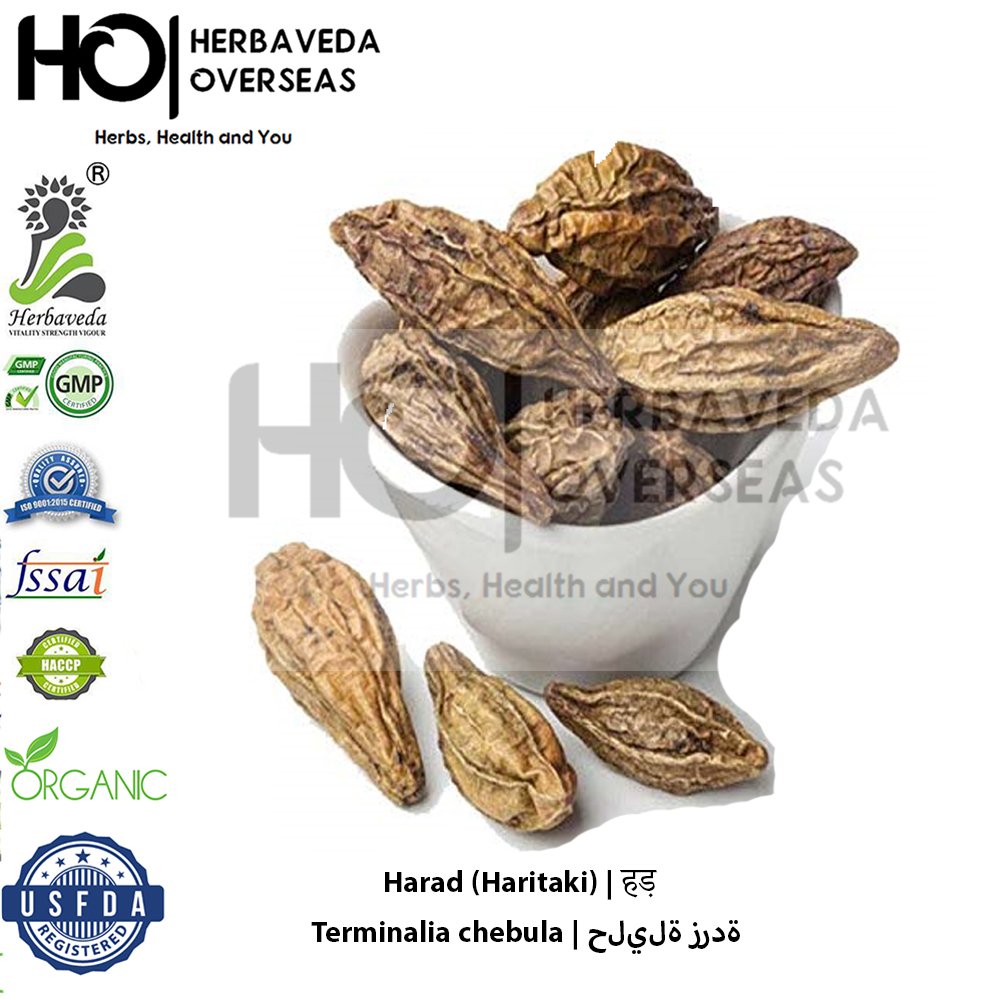
Harad is the dried, ridged fruit of the haritaki tree, a large forest tree found across India, especially in Madhya Pradesh, Maharashtra and the Himalayan foothills. The fruits fall from the tree, are collected and sun-dried until hard and wrinkled. Classical Ayurvedic texts call haritaki the “king of medicines” and describe several kinds based on shape and where they grow. It is one of the three fruits in Triphala, along with Amla and Baheda.
Quick facts
- Botanical name: Terminalia chebula Retz.
- Family: Combretaceae
- Part supplied: whole dried fruit
- Hindi: हड़, हरड़
- Urdu: ہڑ
- Other names: Haritaki, Abhaya (Sanskrit), Halela (Unani), Kadukkai (Tamil), chebulic myrobalan
Traditional uses
- One of the three fruits in Triphala churna.
- Described in Ayurvedic texts as a Rasayana and traditionally taken for digestion and regular bowel habits.
- Used in Unani medicine as Halela in itrifal and other preparations.
- Used as a natural tannin and dye in leather and textile work.
Who buys it from us
- Ayurvedic and Unani manufacturers
- Triphala and churna makers
- Pansari shops and herb retailers
- Natural dye and tanning units
Quality and packing
- Whole, hard, wrinkled fruits, yellow-brown to dark brown.
- Heavy for their size, with no fungus, holes or dust.
- A strong astringent taste when a small piece is chewed.
- Packed in bulk bags to the buyer’s requirement and shipped across India from Delhi.
Herbaveda Overseas has traded raw herbs from Khari Baoli, Delhi, since 1971. Use our Request a Quote form for the latest bulk price, a sample or a custom pack size.
Frequently asked questions
What is the difference between harad and choti harad?
Choti harad (black harad) is the young, dried fruit and is small and dark. Harad is the mature fruit and is larger and yellow-brown.
Is harad used in Triphala?
Yes. Triphala is made from equal parts of harad, baheda and amla.
Do you supply harad in bulk?
Yes, whole or as powder, across India. Send an enquiry with your quantity.
Sold as a raw herb for traditional and trade use. This information is educational and is not a substitute for medical advice.