
Description
What is it?
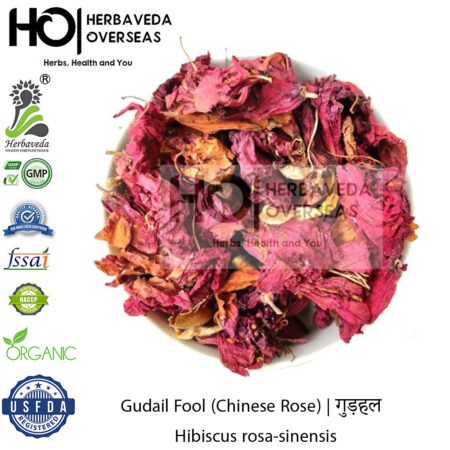
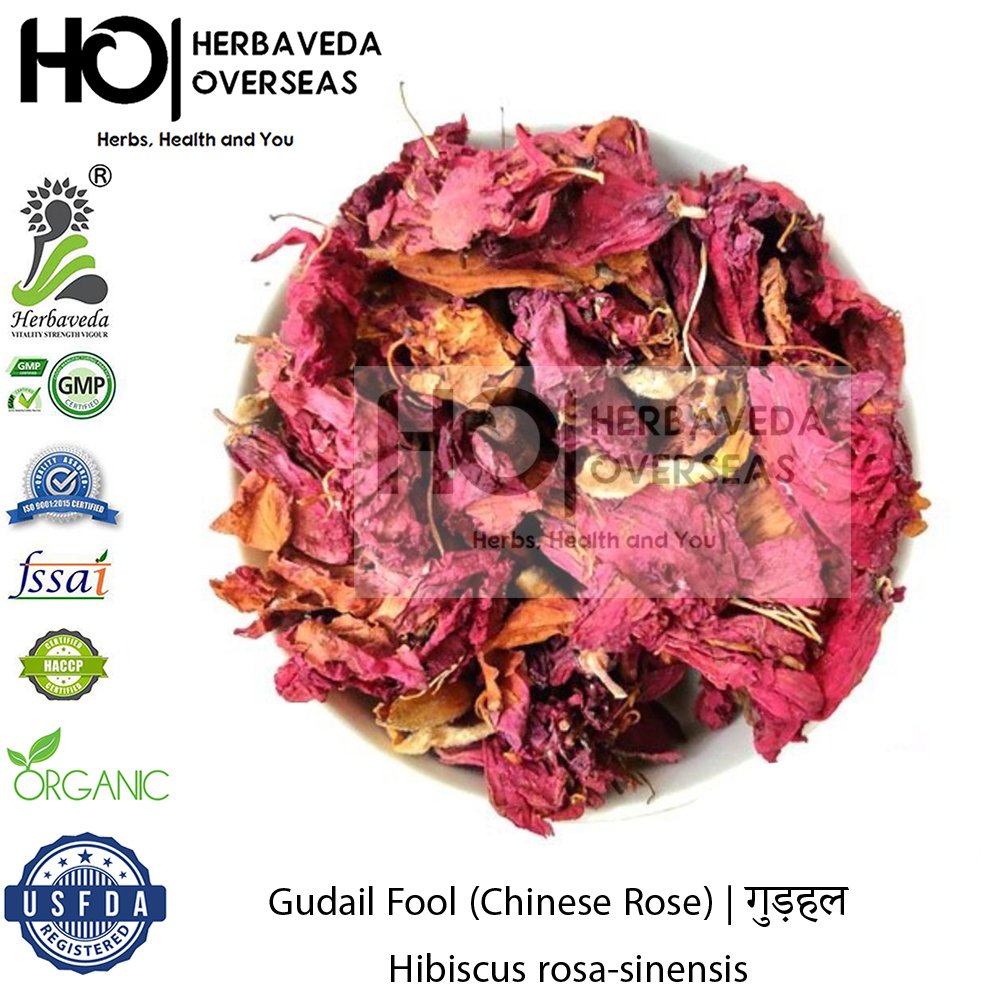
Gudhal is the red garden hibiscus that grows in almost every Indian courtyard and temple. Grandmothers have long boiled its flowers in coconut oil for hair. In Ayurveda it is called Japa. This is not the sour roselle used for hibiscus tea.
Also known as
Japa (Sanskrit), Jaswand (Marathi), Jaba (Bengali), Sembaruthi (Tamil), Chinese rose, shoe flower, Hibiscus rosa-sinensis, گڑہل (Urdu)
How it is used
- Hair oil: flowers are slowly heated in coconut oil and strained.
- Hair pack: ground with amla, methi or curd and applied to the scalp.
- Face pack: powdered and mixed with rose water.
- Tea and puja: brewed as a mild tea, or offered in puja.
How to use
For hair oil, heat a handful of flowers in 200 ml coconut oil on low flame until crisp, cool and strain. For tea, steep 2–3 flowers in hot water for 5 minutes. Do a patch test before using on skin. Pregnant or breastfeeding women, children and anyone on regular medication should check with a doctor or Ayurvedic practitioner first.
How to judge good quality
- Whole dried flowers or petals, deep red to maroon.
- Dry and clean, with no mould, dust or stalks.
Storage
Keep in an airtight container in a cool, dry place away from sunlight and moisture.
Frequently asked questions
Is gudhal the same as hibiscus tea?
Most hibiscus tea is made from roselle. Gudhal makes a milder tea and is mainly used for hair care.
Can I use it on my hair every week?
Yes, gudhal oil and packs are traditionally used once or twice a week.
Do you deliver across India?
Yes. Orders ship from Delhi to all states, usually within 1–3 working days. For bulk quantities, use our Request a Quote form.
Herbaveda, Delhi – trusted since 1971.
Sold as a raw herb for traditional and trade use. This information is educational and is not a substitute for medical advice.