
Description
What is it?
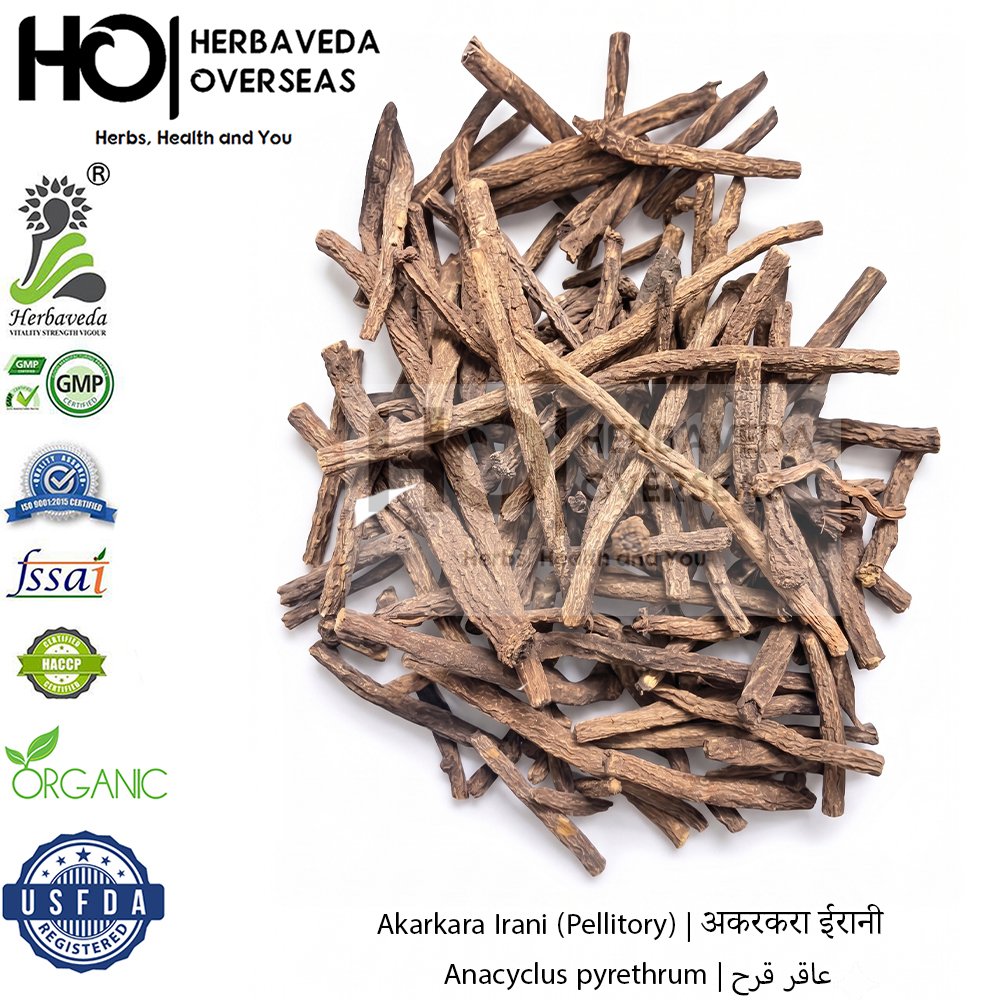
Akarkara is the dried root of pellitory, a small daisy-like plant from North Africa and the Middle East. When chewed it makes the mouth tingle and water, which is why it has long been used in tooth powders. In Khari Baoli it is sold in grades by origin; the Irani grade is imported and is known for thick, strongly pungent roots.
Quick facts
- Botanical name: Anacyclus pyrethrum (L.) Lag. (as traded)
- Family: Asteraceae
- Part supplied: dried roots
- Grade: Irani (imported)
- Hindi: अकरकरा
- Urdu: عاقرقرحا
- Other names: Pellitory, Aqarqarha (Unani), Akallakam (Tamil), Akkalkara (Marathi)
Traditional uses
- Used in Unani medicine as Aqarqarha, in majoons and in tooth powders.
- Described in Ayurvedic texts as a pungent, warming root and used in nerve-tonic and vitality formulations.
- Ground into traditional tooth powders and gargles for the mouth and gums.
Who buys it from us
- Unani and Ayurvedic manufacturers
- Hakims and vaidyas
- Tooth-powder and oral-care makers
- Pansari shops
Quality and packing
- Whole, dry root pieces, brown outside and pale inside.
- When chewed, gives a strong tingling and numbing feel and makes the mouth water – the sign of good akarkara.
- No mould, dust or insect holes.
- Packed in bulk bags to the buyer’s requirement and shipped across India from Delhi.
Herbaveda Overseas has traded raw herbs from Khari Baoli, Delhi, since 1971. Use our Request a Quote form for the latest bulk price, a sample or a custom pack size.
Buying and quality notes
How to check quality: Good Irani akarkara roots are brown and wrinkled outside and whitish inside. The simplest check is a tiny taste: real pellitory root gives a strong tingling, numbing feel on the tongue within seconds. Roots with little or no tingle are old or are a substitute.
Common mix-up: In Indian markets “akarkara” can also mean the flower heads of Spilanthes acmella (the toothache plant). That is a different plant and a different part. Irani akarkara is the root of Anacyclus pyrethrum.
Storage: Store whole roots airtight in a cool, dry place. Whole roots keep their pungency far longer than powder.
Frequently asked questions
What is the difference between Irani, Algerian and Indian akarkara?
They are trade grades based on origin, root size and pungency. Irani and Algerian are imported; Indian (desi) is grown locally.
Why does akarkara make the mouth tingle?
It contains a natural compound called pellitorine that causes tingling and numbness.
Do you supply Akarkara Irani in bulk?
Yes. Send an enquiry with your quantity and grade.
Sold as a raw herb for traditional and trade use. This information is educational and is not a substitute for medical advice.