
Description
What is it?
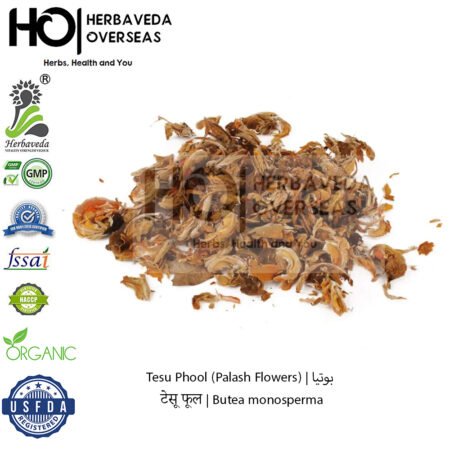
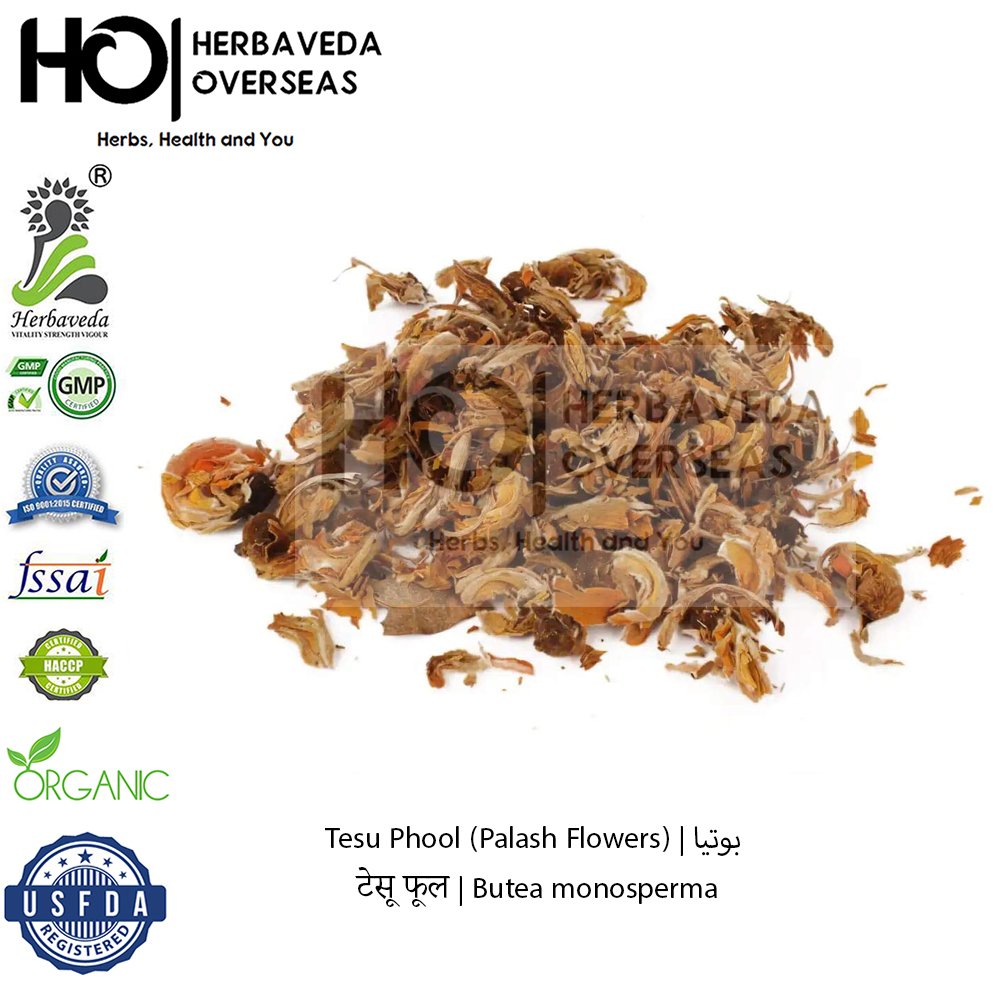
Tesu flowers come from the palash tree, which turns forests bright orange in late winter. For hundreds of years, Indians have soaked these flowers to make the yellow-orange colour played with at Holi. Many families now use Tesu again instead of chemical colours.
Also known as
Palash phool, Dhak, Palasha (Sanskrit), Kesudo (Gujarati), ٹیسو پھول (Urdu), flame of the forest, Butea monosperma
How it is used
- Holi colour: soaked for wet colour, or dried and ground for gulal.
- Natural dye: used to dye cotton and silk in yellow-orange shades.
- Bath and face packs: soaked flower water is used in traditional bath rituals and packs.
How to use
For wet colour, soak a handful of flowers in a bucket of water overnight, or boil for 15–20 minutes, then strain. For powder, dry the flowers fully and grind fine. Do a patch test on skin first.
How to judge good quality
- Whole, dried flowers, deep orange to reddish-brown.
- Dry and crisp, with a few stalks and calyces.
- Gives a strong yellow-orange colour when soaked.
Storage
Keep in a dry, airtight bag away from sunlight to keep the colour strong.
Frequently asked questions
Is Tesu colour safe for skin?
It is a natural flower colour and is gentle for most people, but always do a small patch test first.
Will the colour stain clothes?
Yes, it can leave a yellow-orange stain on fabric, so wear old clothes.
Do you deliver across India?
Yes. Orders ship from Delhi to all states, usually within 1–3 working days. For bulk quantities, use our Request a Quote form.
Herbaveda, Delhi – trusted since 1971.
Sold as a raw herb for traditional and trade use. This information is educational and is not a substitute for medical advice.