
Description
What is it?
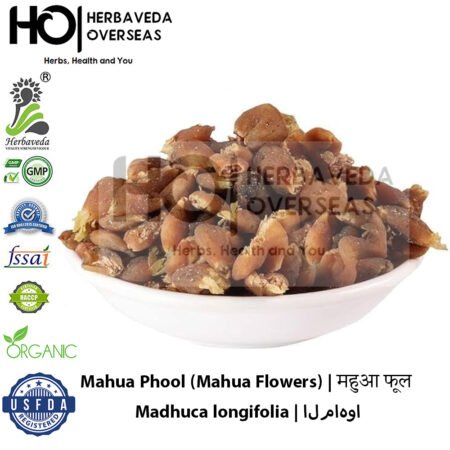
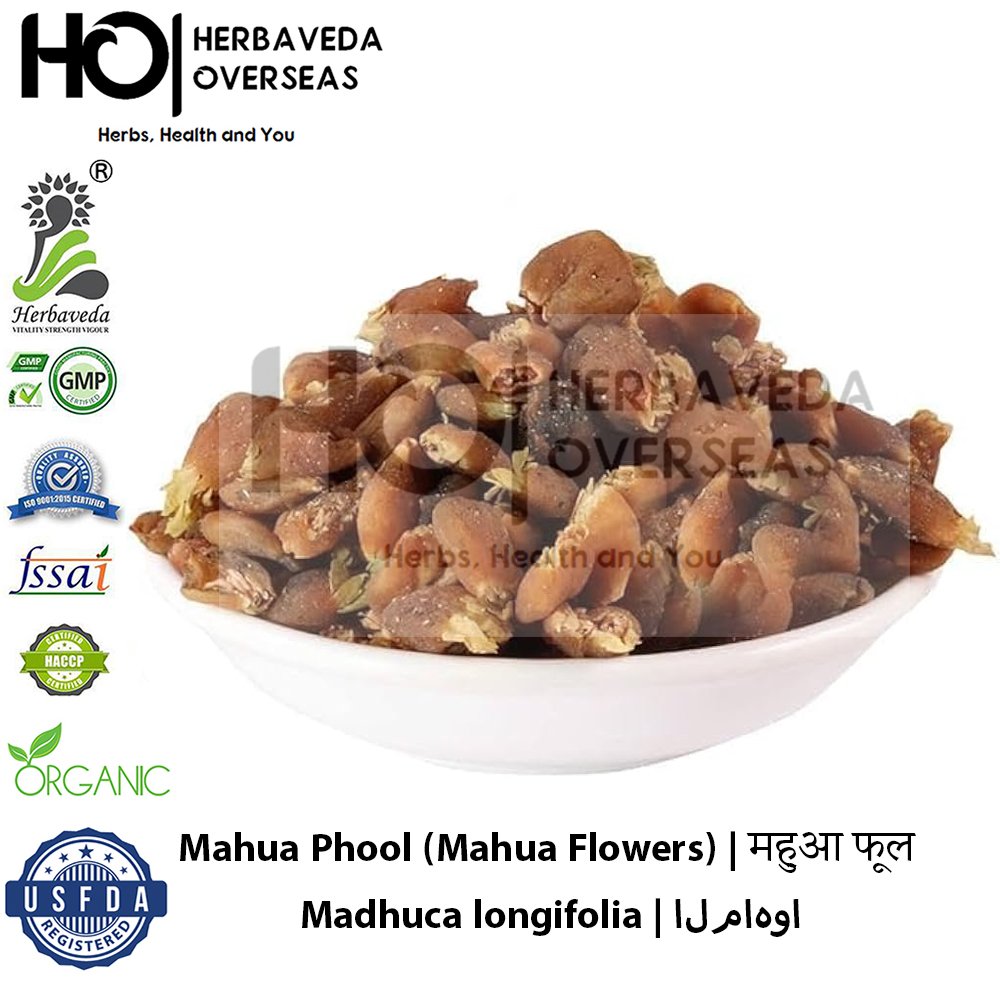
Mahua flowers fall from the mahua tree in early spring, and forest families collect them at sunrise and dry them in the sun. They are soft, fleshy and naturally sweet, with a honey-like taste. For tribal communities in Jharkhand, Chhattisgarh and Odisha, mahua is an everyday food and a valued forest crop.
Also known as
Madhuka (Sanskrit), Mohwa, مہوا پھول (Urdu), Iluppai (Tamil), Indian butter tree flower, Madhuca longifolia
How it is used
- Traditional food: boiled, roasted or mashed into rotis, laddoos, halwa and kheer.
- Ayurvedic tradition: described as a cooling, nourishing food.
- Natural sweetener: used instead of sugar in some village recipes.
How to use
Wash the flowers, soak for an hour, then cook them with milk, rice or flour. They can also be lightly roasted in ghee and eaten as a snack.
How to judge good quality
- Plump, fleshy, light-brown dried flowers.
- Sweet, honey-like smell.
- No sand, mould, sourness or fermented smell.
Storage
Keep in an airtight container in a cool, dry place away from sunlight and moisture. Keep away from damp, as the flowers are sugary and can attract insects.
Frequently asked questions
What does mahua taste like?
Sweet, like a soft dried fruit with a honey flavour.
Who should check with a doctor first?
People watching their sugar intake, because mahua flowers are naturally sweet.
Do you deliver across India?
Yes. Orders ship from Delhi to all states, usually within 1–3 working days. For bulk quantities, use our Request a Quote form.
Herbaveda, Delhi – trusted since 1971.
Sold as a raw herb for traditional and trade use. This information is educational and is not a substitute for medical advice.