
Description
What is it?
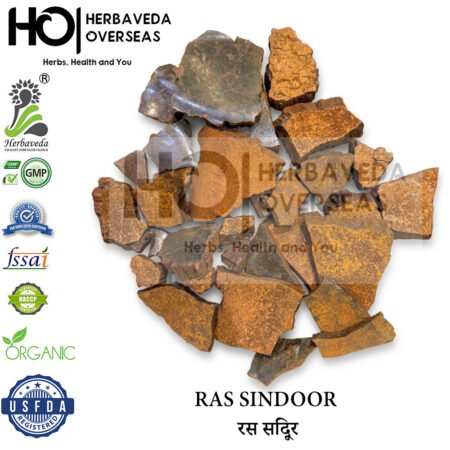
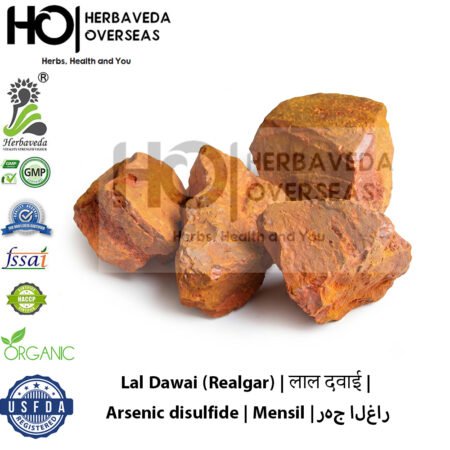
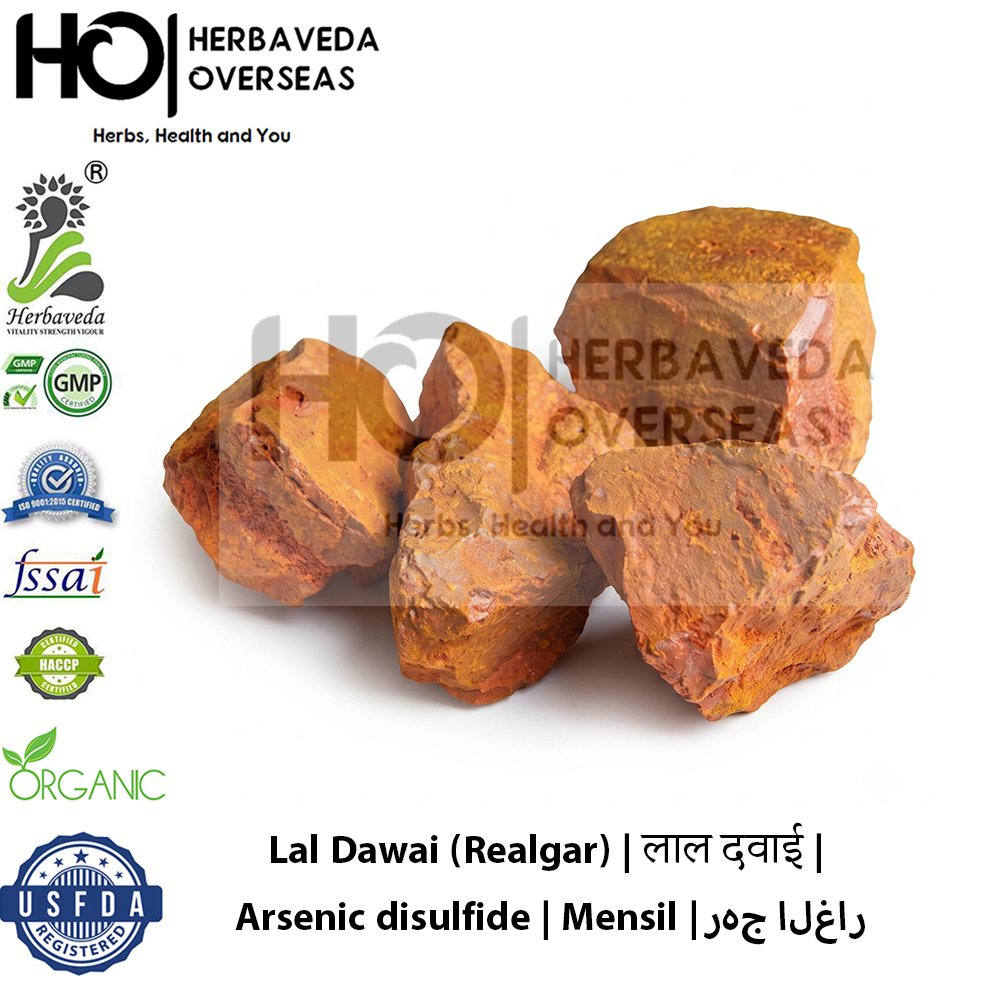
Lal Dawai is the trade name for realgar, a soft orange-red mineral made of arsenic and sulphur. In Ayurvedic Rasa Shastra it is called Manahshila. It is a poisonous mineral and is sold for professional use by qualified practitioners and licensed manufacturers, who purify it by traditional methods before use.
Also known as
Manahshila (Sanskrit), Mensil, Zarnikh-e-Surkh / Zarnikh-e-Ahmar (Unani), زرنیخ سرخ (Urdu), realgar, arsenic sulphide
How it is used
- Rasa Shastra: described in classical texts, used only after strict multi-step purification (shodhana).
- Licensed manufacture: used by licensed Ayurvedic and Unani pharmacies in classical mineral preparations.
- Pigment: historically used as an orange-red colour.
Safety
Lal Dawai (realgar) is an arsenic mineral and is highly poisonous. It must never be eaten, tasted, licked or used as a home remedy. Do not heat or burn it, as the fumes are toxic. Handle with gloves, wash your hands afterwards and keep it in a sealed, clearly labelled container away from food, children and pets. In Ayurveda and Unani it is used only by qualified practitioners and licensed manufacturers after strict traditional purification (shodhana).
How to judge good quality
- Soft, bright orange-red lumps or crystals.
- Free from stones and earthy matter.
- Packed in sealed, clearly labelled containers.
Storage
Keep in a sealed, clearly labelled container in a locked place, away from food, children and pets.
Frequently asked questions
Is Lal Dawai poisonous?
Yes. It contains arsenic. Never eat it or use it as a home remedy.
What is the difference between Lal Dawai and Hartal?
Both are arsenic minerals. Lal Dawai is orange-red; Hartal is yellow.
Do you deliver across India?
Yes. Orders ship from Delhi to all states, usually within 1–3 working days. For bulk quantities, use our Request a Quote form.
Herbaveda, Delhi – trusted since 1971.
Sold as a raw herb for traditional and trade use. This information is educational and is not a substitute for medical advice.