
Description
What is it?
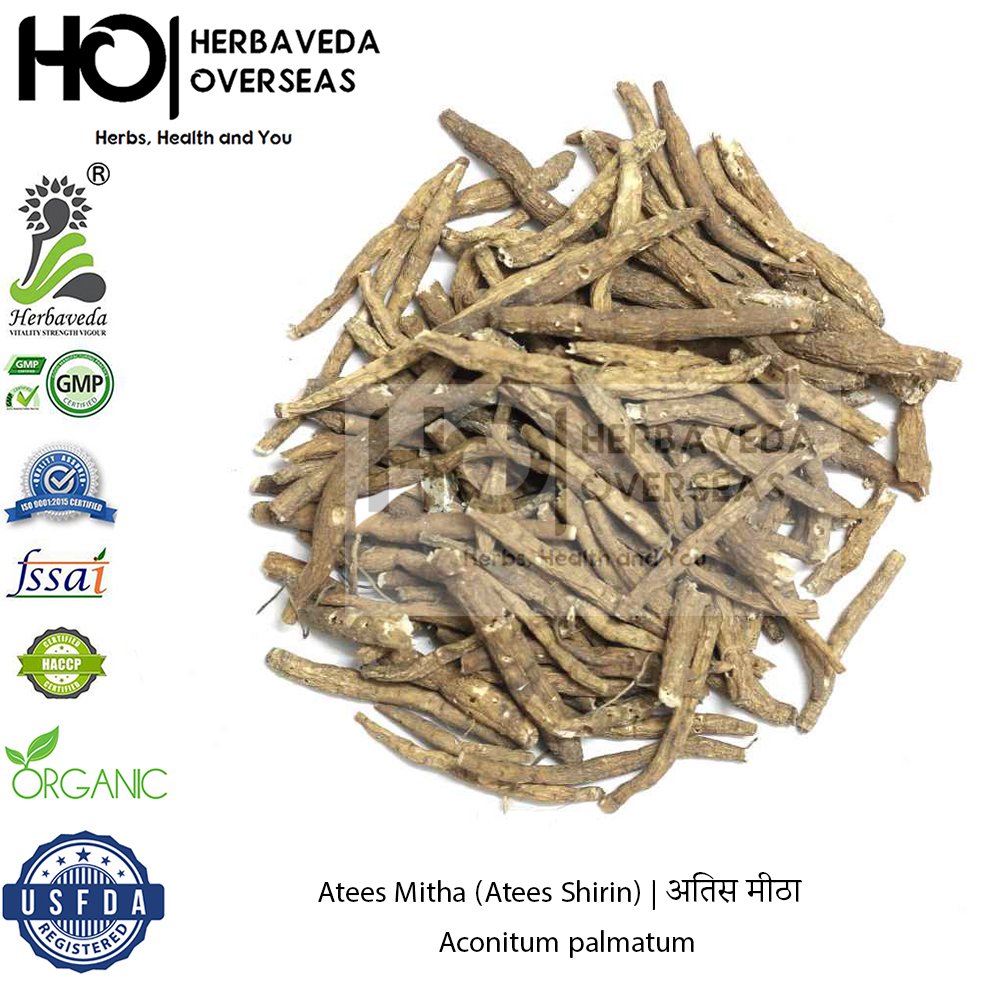
Atees Mitha is a small tuberous root collected from the high Himalaya. In the herb trade, atees is sold in two kinds – “kadvi” (bitter) and “mitha” (sweet). Both come from aconite plants, a family that includes some very poisonous species, so atees is bought only from trusted traders and used under expert guidance.
Quick facts
- Botanical name: Aconitum palmatum (as traded)
- Family: Ranunculaceae
- Part supplied: dried root tubers
- Hindi: अतीस मीठा, अतिस मीठा
- Urdu: اتیس میٹھا
- Other names: Meetha Atees, Indian aconite, Himalayan atees
Traditional uses
- Used by Ayurvedic practitioners in traditional preparations.
- Traded alongside Atees Kadvi (Ativisha) in Khari Baoli.
Safety
Atees belongs to the aconite family, and aconite roots can look alike. Never use it at home without a qualified Ayurvedic practitioner, who can confirm the material and advise the amount. Keep away from children.
Who buys it from us
- Ayurvedic manufacturers
- Vaidyas and pansari shops
Quality and packing
- Small, hard, tapering roots, light grey-brown outside and whitish inside.
- Clean and dry, free from mould, soil and insect damage.
- Packed in bulk bags to the buyer’s requirement and shipped across India from Delhi.
Herbaveda Overseas has traded raw herbs from Khari Baoli, Delhi, since 1971. Use our Request a Quote form for the latest bulk price, a sample or a custom pack size.
Frequently asked questions
What is the difference between atees mitha and atees kadvi?
They are two traded kinds of atees root. Kadvi is very bitter; mitha is milder. They come from different aconite species.
Is atees mitha safe to use at home?
No. Use it only under a qualified practitioner.
Do you supply atees mitha in bulk?
Yes. Send an enquiry with your quantity.
Sold as a raw herb for traditional and trade use. This information is educational and is not a substitute for medical advice.