
Description
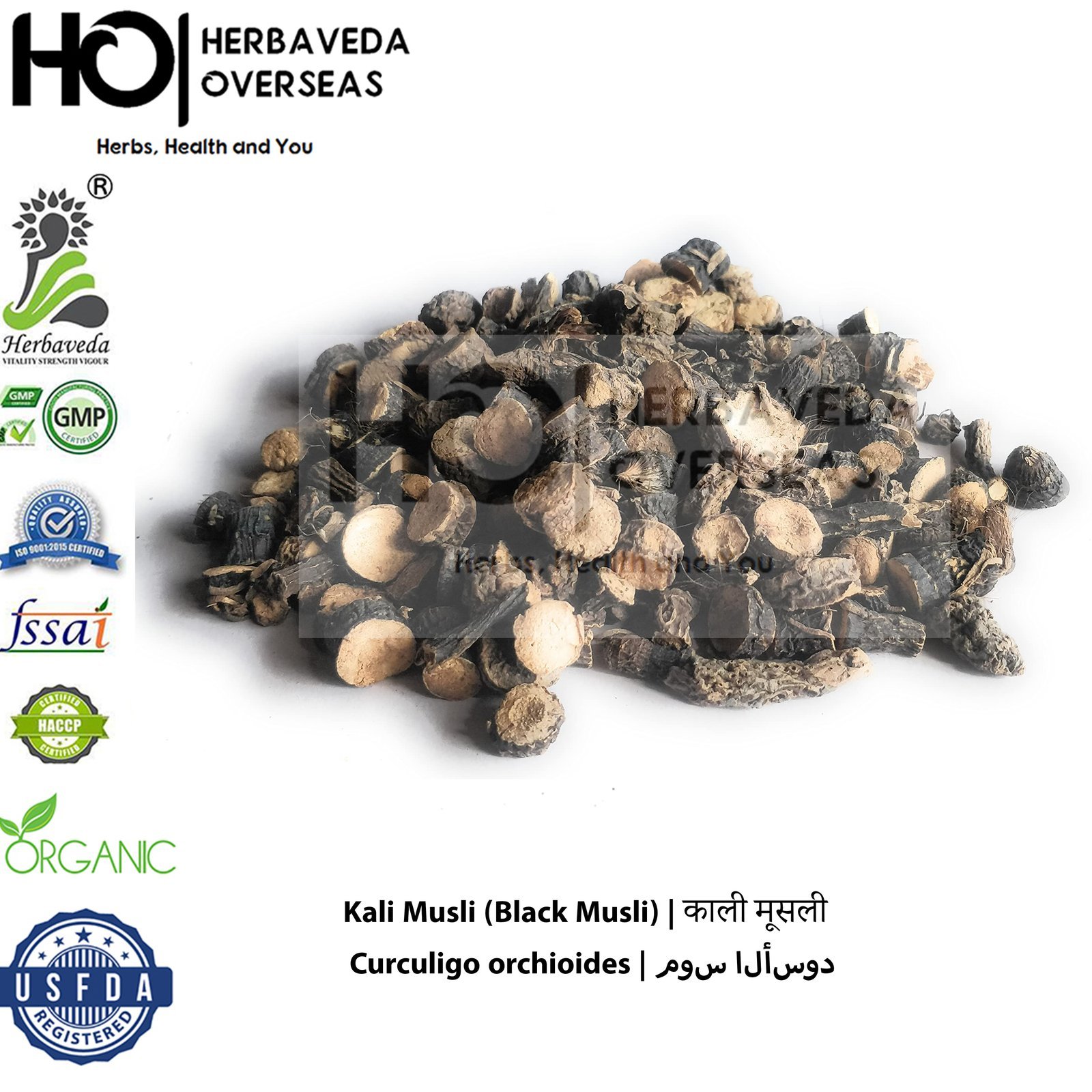
Curculigo orchioides, black musli or kali musli, is a small rhizomatous herb of the family Hypoxidaceae, native to the tropical and subtropical grasslands and light forest floors of South and Southeast Asia, distributed from India and Sri Lanka through Myanmar to southern China. The plant bears grass-like, plicate leaves at ground level and produces small yellow flowers close to the soil surface. The dark, starchy tuberous roots are documented in the Charaka Samhita and Ashtanga Hridayam within the Vajikarana (aphrodisiac) group of herbs, and are traditionally incorporated in formulations associated with male reproductive vitality, physical strength, and general tonic action. It is distinguished from Safed Musli (Chlorophytum borivilianum) by its darker colour and distinct phytochemical profile. Its collection from wild populations is increasingly restricted.