
Description
What is it?
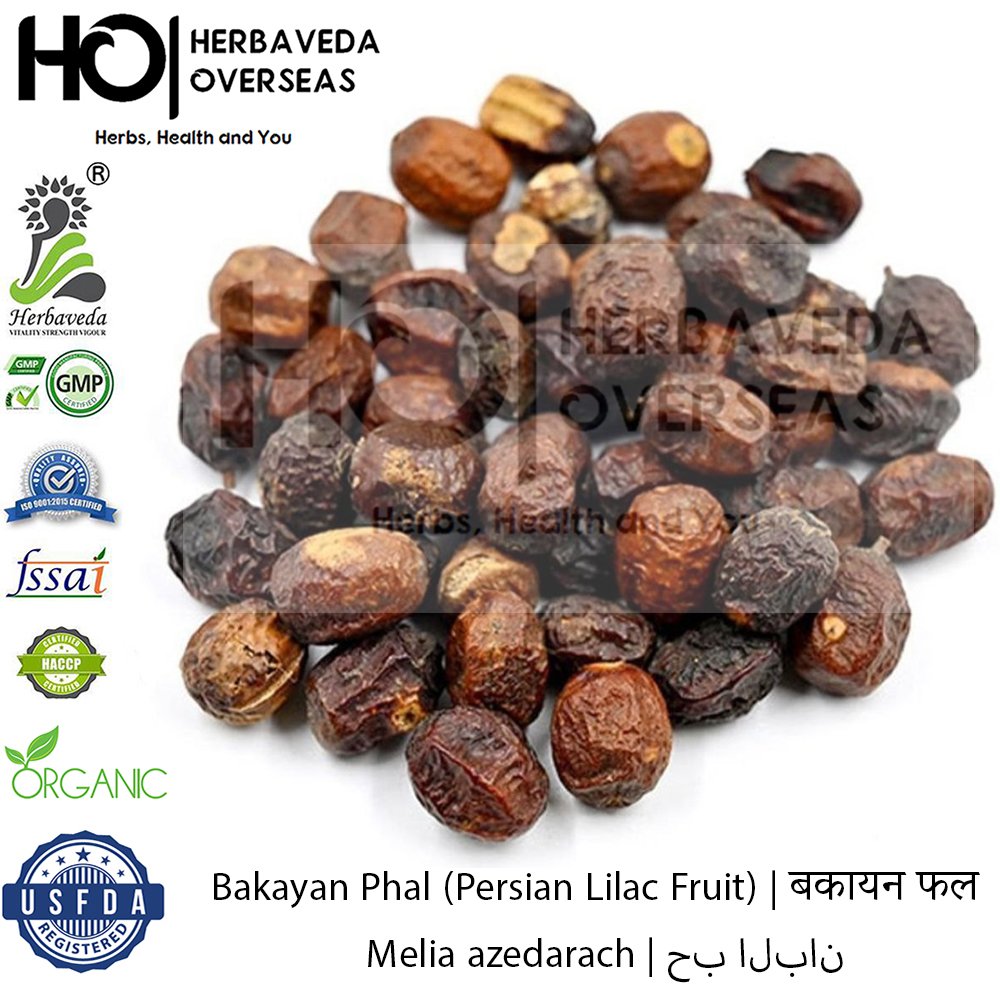
Bakayan is a fast-growing tree of the neem family, common across Punjab, Haryana and Uttar Pradesh. In spring it has scented lilac flowers, and in winter its small yellow fruits hang on the bare branches. The fruits are collected, dried and traded. The hard stones inside were once strung as beads, which is why it is also called the bead tree. Like several plants in its family, the fruit is toxic if swallowed.
Quick facts
- Botanical name: Melia azedarach L.
- Family: Meliaceae
- Part supplied: whole dried fruit
- Hindi: बकायन, बकाइन फल, डेक
- Urdu: بکائن
- Other names: Mahanimba (Sanskrit), Darakht-e-Bakain (Unani), Persian lilac, chinaberry, bead tree
Traditional uses
- Described in Unani texts as Darakht-e-Bakain and used by hakims, mainly in external preparations for the skin and scalp.
- Listed as Mahanimba in Ayurvedic texts, used only by practitioners.
- Crushed and soaked by farmers as a natural insect repellent, in the same way as neem.
Safety
Bakayan fruits are poisonous if eaten, and cases of poisoning in children and animals are known. Do not eat them or give them to children or pets. In Ayurveda and Unani they are used only by qualified practitioners, mostly in external preparations. Keep them away from food and wash your hands after handling.
Who buys it from us
- Licensed Ayurvedic and Unani manufacturers
- Organic farming and pest-control makers
- Herb wholesalers
Quality and packing
- Whole, round, wrinkled fruits, yellow-brown to light brown.
- Dry, with a hard stone inside and no mould.
- Packed in bulk bags to the buyer’s requirement and shipped across India from Delhi.
Herbaveda Overseas has traded raw herbs from Khari Baoli, Delhi, since 1971. Use our Request a Quote form for the latest bulk price, a sample or a custom pack size.
Frequently asked questions
Is Bakayan the same as neem?
No. It is a related tree of the same family, but a different species with different properties.
Is Bakayan fruit poisonous?
Yes. It is poisonous if eaten and must be kept away from children and animals.
Do you supply Bakayan Phal in bulk?
Yes, to businesses that handle it properly. Send an enquiry with your quantity.
Sold as a raw herb for traditional and trade use. This information is educational and is not a substitute for medical advice.