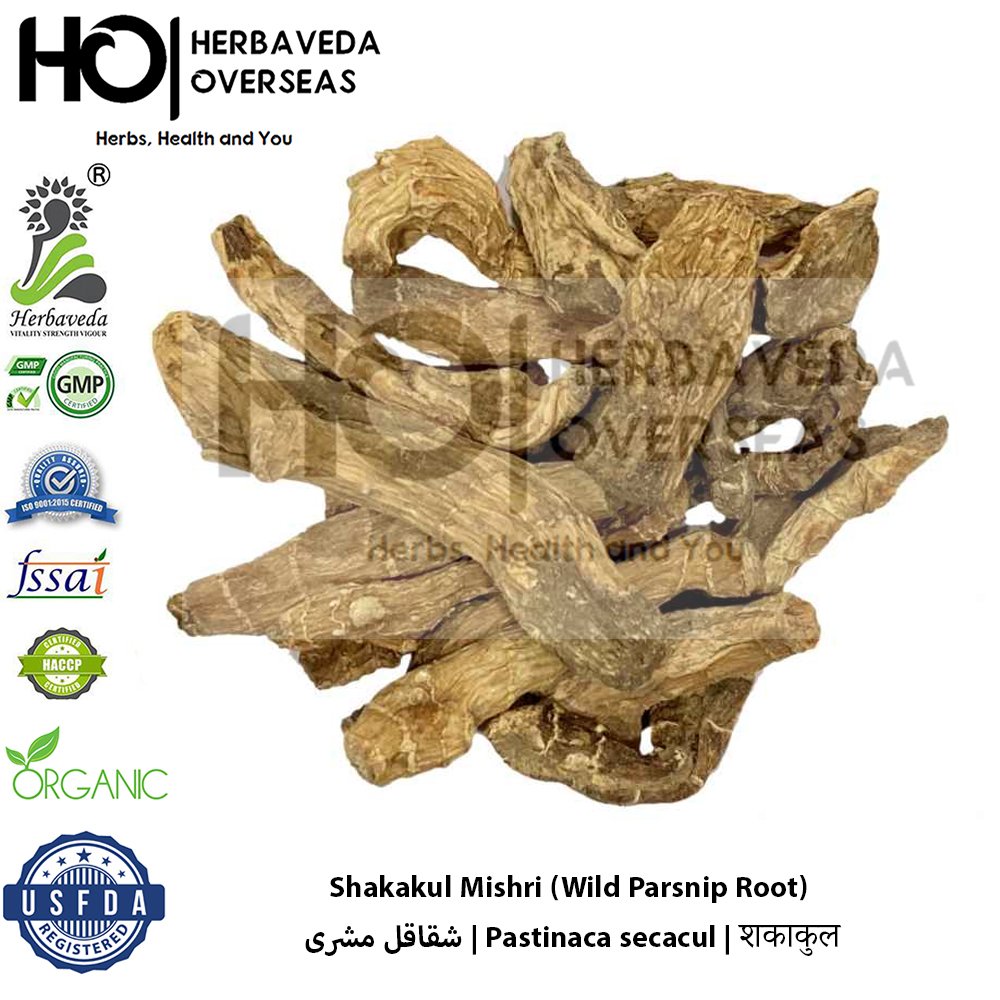
Shakakul Mishri (Wild Parsnip Root) | شقاقل مشری | Pastinaca secacul

in stock

Pastinaca secacul is a biennial umbelliferous herb native to the mountainous regions of Central Asia, Afghanistan, and Iran. Its sweet, fleshy taproot — Shakakul Mishri in classical Unani pharmacopoeia — is incorporated in Mufarreh and Majoon compound preparations for vitality, male reproductive health, and nervous system tonification.

  • Free Shipping & Exchanges
  • Flexible and secure payment, pay on delivery
  • 600,000 happy customers
Guarantee Safe & Secure Checkout

Quick facts: Shakakul Mishri (Wild Parsnip Root)

Common name
Shakakul Mishri, Wild Parsnip Root
Hindi / local name
شقاقل مشری
Botanical name
Pastinaca secacul
Type
Raw roots
Packed by
Herbaveda Overseas, Khari Baoli, Delhi (since 1971)
Storage
Airtight container, cool and dry place, away from sunlight
Bulk / export
Available – ask for a wholesale quote

What is Shakakul Mishri called in English?

Shakakul Mishri (شقاقل مشری) is Wild Parsnip Root – botanical name Pastinaca secacul.

How do I order Shakakul Mishri in bulk?

Send us your quantity and destination through the contact page or WhatsApp +91-99717-54285 for a wholesale or export quote.

For traditional and culinary use. Not intended to diagnose, treat, cure or prevent any disease. Consult a doctor before use, especially if you are pregnant, nursing or taking medicines.

Description

Pastinaca secacul, the sweet Shakakul, is a biennial herb of the family Apiaceae, native to the rocky mountain meadows and dry upland grasslands of Central Asia — particularly Afghanistan, Tajikistan, and northeastern Iran — related to the cultivated parsnip but botanically distinct. The fleshy, sweet taproot, known as Shakakul Mishri (mishri meaning sugar, reflecting its sweetness), is a classical Unani pharmacopoeial drug listed in the Makhzan-ul-Adwiya and incorporated in prestigious compound preparations including Maajun Shakakul — traditionally formulated for male reproductive vitality, general strength, and nervous system tonification. Documented in Avicenna’s Al-Qanun fi al-Tibb as a nutritive Rasayana-equivalent herb, the root is traded from Afghanistan and Central Asia into Indian herbal markets through traditional trade channels.