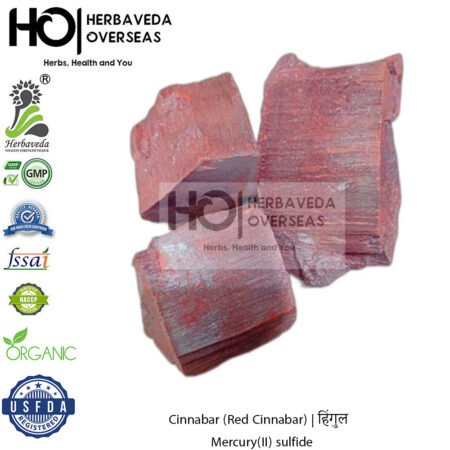
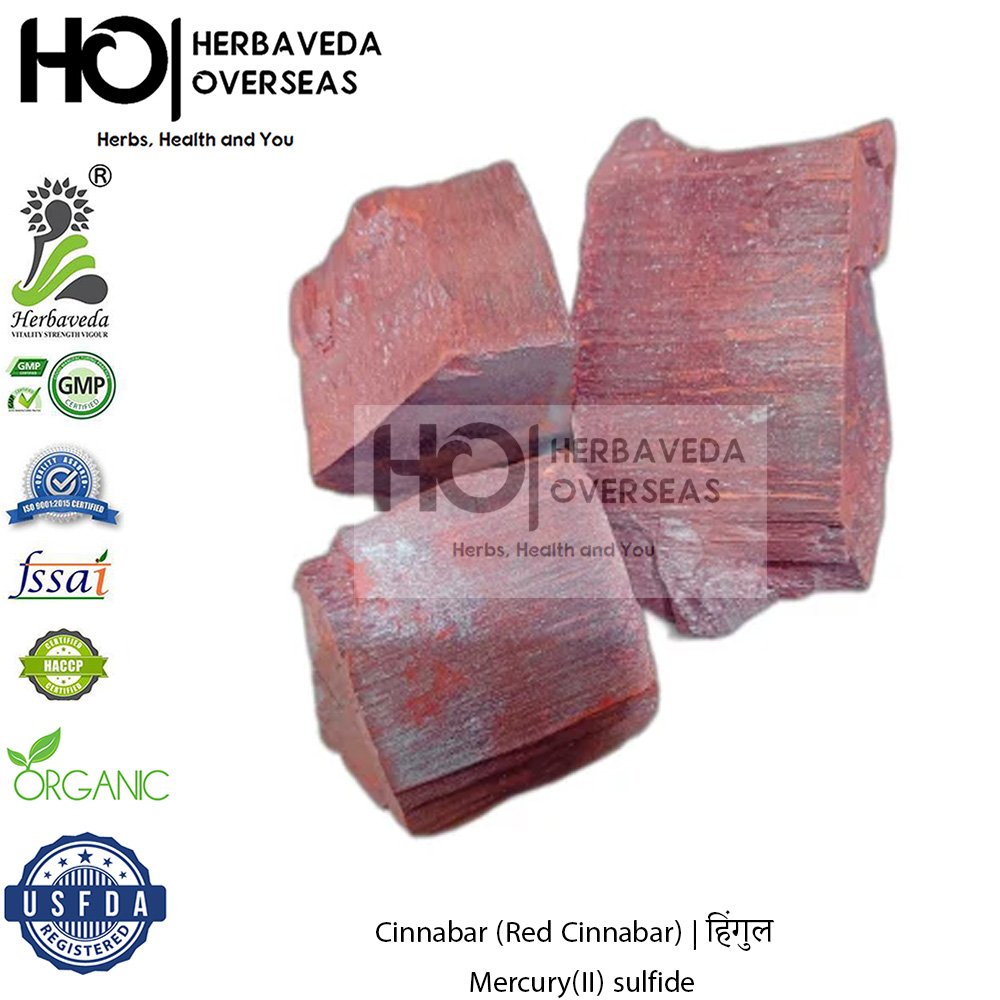
Cinnabar (Red Cinnabar) | हिंगुल | Mercury(II) sulfide

1000 in stock

Price range: ₹31,500.00 through ₹42,000.00 inc GST

Cinnabar is a vibrant red mineral composed of mercury sulfide. In traditional Ayurvedic Rasashastra, it is purified and used to treat chronic fevers, respiratory ailments, and skin conditions. Due to its inherent toxicity, it must undergo strict purification processes before being utilized in therapeutic preparations.

Buy It Now
  • Free Shipping & Exchanges
  • Flexible and secure payment, pay on delivery
  • 600,000 happy customers
Guarantee Safe & Secure Checkout
SKU: hbv2_10798_parent Categories: ,

Quick facts: Cinnabar (Red Cinnabar)

Common name
Cinnabar, Red Cinnabar
Hindi / local name
हिंगुल
Type
Minerals & salts
Pack sizes
0.5 kg, 1 kg (from ₹31,500)
Packed by
Herbaveda Overseas, Khari Baoli, Delhi (since 1971)
Storage
Airtight container, cool and dry place, away from sunlight
Bulk / export
Available – ask for a wholesale quote

What is Cinnabar called in English?

Cinnabar (हिंगुल) is Red Cinnabar.

Can I buy Cinnabar in bulk?

Yes. Retail packs are sold here; for bulk quantities, contact us for wholesale and export prices.

For traditional and culinary use. Not intended to diagnose, treat, cure or prevent any disease. Consult a doctor before use, especially if you are pregnant, nursing or taking medicines.

Description

Cinnabar is a naturally occurring mineral found in various volcanic regions worldwide. In Ayurvedic medicine, it is referred to as Hingula and is highly valued in the branch of Rasashastra, which focuses on the therapeutic use of metals and minerals. In its raw state, cinnabar is toxic; however, traditional practitioners employ a rigorous purification method known as Shodhana to render it safe for medicinal use. It is used only in purified form in classical preparations; raw cinnabar contains mercury, is toxic, and is supplied for professional and industrial use only. It is believed to act as a potent rejuvenator, enhancing the body’s overall strength and vitality while balancing the internal doshas. Despite these traditional uses, modern toxicology cautions against its unsupervised use due to the potential for mercury poisoning, which can damage the nervous system and kidneys. Therefore, its application is reserved for highly specialized practitioners who can ensure the chemical stability of the final formulation. Its integration into wellness practices highlights the complex intersection of ancient alchemy and early pharmacology.
Additional information

WeightN/A
DimensionsN/A