
Description
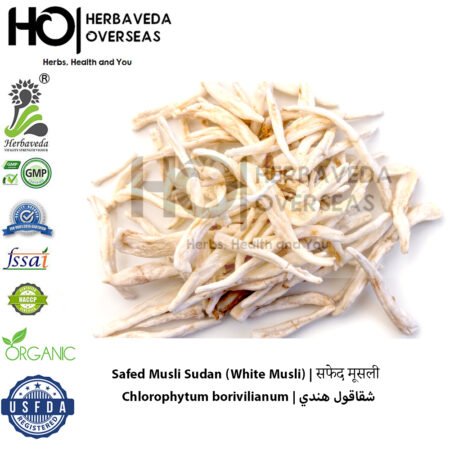
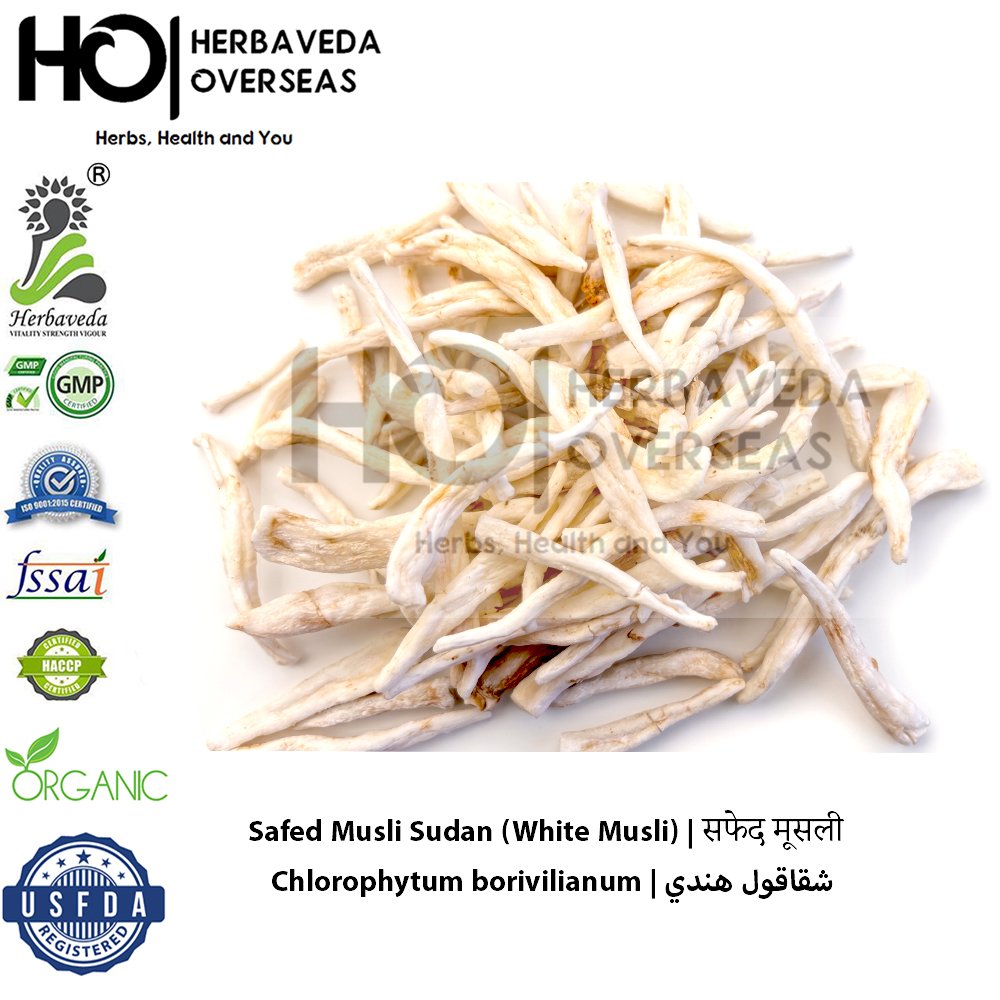
Chlorophytum borivilianum, white musli, is a perennial herb of the family Asparagaceae, native to the dry deciduous forests and grasslands of the western and central Indian subcontinent — particularly Gujarat, Rajasthan, and Madhya Pradesh. The plant produces grass-like leaves and small white flowers at ground level, with clusters of white, fleshy, cylindrical tuberous roots that are the primary commercial product. Known in Ayurveda as Safed Musli and documented in classical and regional Ayurvedic texts as a Vajikara (aphrodisiac), Galactagogue, and Rasayana herb, the roots contain steroidal saponins including borivilianosides and furostanol glycosides. The commercial success of Safed Musli as a botanical raw material has transformed agricultural economics in Rajasthan and Madhya Pradesh over the past three decades, moving from a forest-collected species to a major commercial cultivated crop. India is the world’s primary producer and exporter.