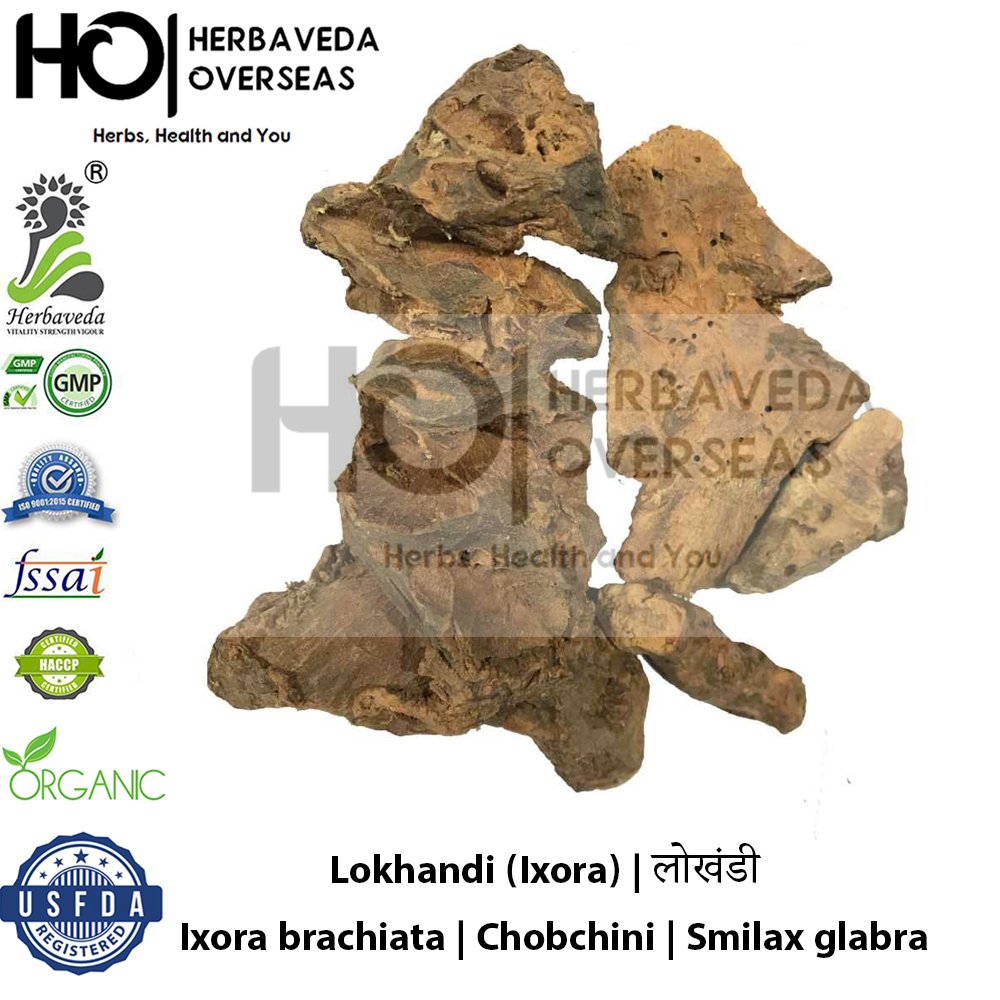
Lokhandi (Ixora) | लोखंडी | Ixora brachiata | Smilax glabra | Chobchini

in stock

Ixora brachiata is a small to medium shrub of the coffee family, native to the tropical forests of peninsular India and Sri Lanka. Its bark and root are documented in classical Ayurvedic and tribal ethnobotanical literature for iron-related and blood-purifying preparations, with the vernacular name referencing its iron-strengthening traditional application.

  • Free Shipping & Exchanges
  • Flexible and secure payment, pay on delivery
  • 600,000 happy customers
Guarantee Safe & Secure Checkout

Quick facts: Lokhandi (Ixora)

Common name
Lokhandi, Ixora
Hindi / local name
लोखंडी
Botanical name
Ixora brachiata
Type
Raw roots
Packed by
Herbaveda Overseas, Khari Baoli, Delhi (since 1971)
Storage
Airtight container, cool and dry place, away from sunlight
Bulk / export
Available – ask for a wholesale quote

What is Lokhandi called in English?

Lokhandi (लोखंडी) is Ixora – botanical name Ixora brachiata.

How do I order Lokhandi in bulk?

Send us your quantity and destination through the contact page or WhatsApp +91-99717-54285 for a wholesale or export quote.

For traditional and culinary use. Not intended to diagnose, treat, cure or prevent any disease. Consult a doctor before use, especially if you are pregnant, nursing or taking medicines.

Description

Ixora brachiata, a medium-sized shrub of the family Rubiaceae, is native to the moist tropical forests and riverine habitats of peninsular India and Sri Lanka. The genus Ixora encompasses numerous species widely cultivated as ornamentals for their dense clusters of tubular flowers, but Ixora brachiata is specifically documented in classical Ayurvedic and ethnobotanical literature for its medicinal bark and root. The vernacular name Lokhandi — derived from Loha (iron) — reflects a traditional association with iron-related formulations and blood-purifying preparations in Ayurvedic texts. Referenced in the Bhavaprakasha Nighantu and regional materia medica from Maharashtra and Karnataka, the plant is also used by tribal communities in the Western Ghats for preparations addressing haematological and general tonic applications.